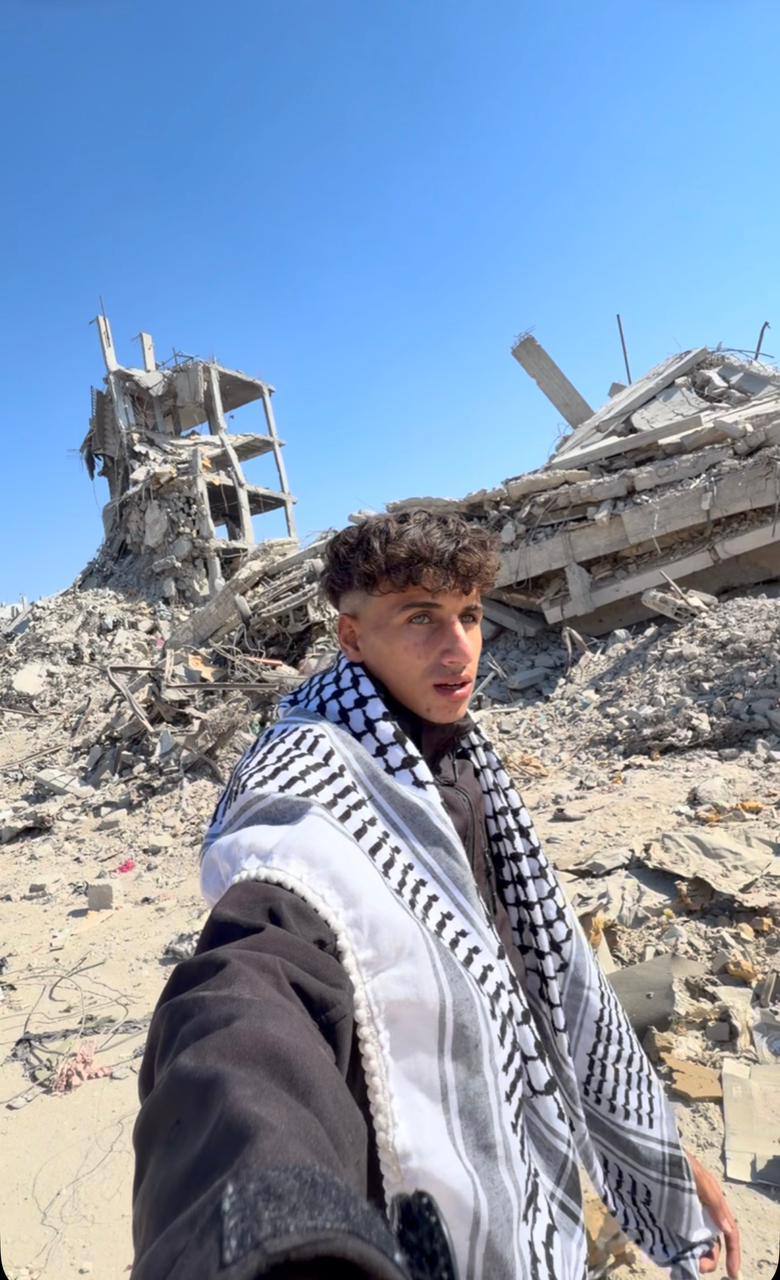
It’s been a while since I last wrote here.
That silence wasn’t absence. It was the opposite, an overload of signal, so much noise compressed into so little meaning that speaking felt like adding distortion. When language itself becomes a battlefield, restraint can be the most honest form of participation. Sometimes you stop transmitting not because you have nothing to say, but because you’re waiting to trust the frequency again.
This is an attempt to return with care. Not to resolve what cannot be resolved in words, but to describe what is actually there, and to leave room for what is still uncertain.
Palestine is not a moment. It is a long-running collision of systems: late Ottoman administrative decline, British colonial governance, postwar partition logic, Cold War security alignment, neoliberal militarization, and increasing ecological and resource pressure. These forces did not unfold abstractly. They were metabolized through land, law, and human bodies.
To speak of Palestine as a single story is to flatten a system into a moral anecdote. That flattening does violence long before weapons are used.
The territory known today as Palestine became the site of multiple, incompatible political promises, each backed by different forms of authority and enforcement. Under the British Mandate (1920–1948), these contradictions were not managed; they were institutionalized. The Balfour Declaration’s commitment to a Jewish national home was embedded into a mandate that simultaneously promised political development for the existing population. These commitments were not parallel. They intersected within the same space, under unequal power conditions.
When the UN proposed partition in 1947, the map reflected demographic abstractions and enforcement capacity more than lived geography. The mass displacement of Palestinians in 1948, the Nakba, was not a spontaneous tragedy. It was the structural rupture that resolved an unsustainable system by force, producing refugees as a durable political condition rather than a temporary emergency.
Since then, Palestinian life has been organized through fragmentation. Not erasure, but categorization, each category carrying different rights, restrictions, and vulnerabilities. Palestinian citizens of Israel hold formal citizenship alongside structural discrimination in land access, housing policy, and public investment. Palestinian residents of East Jerusalem live under permanent residency regimes that can be revoked if bureaucratic criteria are not met. In the West Bank, Palestinians are governed by military law, while Israeli settlers in the same territory are governed by civil law. Administrative detention allows incarceration without charge or trial.
Gaza represents the system at its most compressed. A narrow coastal territory of 365 square kilometers, it is home to more than two million people, the majority of whom are refugees or descendants of refugees from 1948. Since 2007, Gaza has been subjected to a blockade imposed by Israel and enforced in coordination with Egypt. This blockade operates through security doctrine, dual-use classifications, and import-export controls that restrict not only weapons, but concrete, steel, fuel, and medical equipment.
The result is not simply poverty or isolation. It is a controlled collapse: an economy prevented from developing, infrastructure destroyed faster than it can be rebuilt, and a population kept dependent on humanitarian aid while the conditions for recovery are systematically obstructed. Repeated UN assessments have warned that Gaza is becoming uninhabitable, not due to natural disaster, but due to policy choices that prevent stabilization.
Periodic military escalations do not represent a breakdown of this system. They are part of its operating logic. When resistance emerges from conditions of enforced precarity, force is used to reassert control, further degrading infrastructure and deepening dependency. Hospitals, schools, water systems, and power grids are repeatedly damaged in ways that international humanitarian law is meant to prohibit. Whether framed as intent or consequence, the effect is consistent: the erosion of civilian capacity to recover between assaults.
Material factors matter here. Offshore gas reserves discovered near Gaza in 2000 remain undeveloped, their future tied to control over extraction rights and maritime access. Energy is not just a resource; it is leverage. Reconstruction plans are never neutral. They determine who controls future flows of power, revenue, and autonomy.
International law has long recognized the occupation of Palestinian territories as illegal. Israeli, Palestinian, and international human rights organizations have documented systematic violations that meet the threshold of apartheid under international definitions. Yet law and power operate on parallel tracks. Weapons shipments, diplomatic cover, and economic ties move faster than legal accountability. Humanitarian access is negotiated rather than guaranteed. This is not a failure of law alone, but the result of a system in which legal norms lack enforcement mechanisms against aligned power.
Information is governed by similar constraints. Independent journalists are largely barred from Gaza, while embedded reporting channels dominate institutional media flows. This does not eliminate documentation, open-source investigators, local journalists, and NGOs continue to collect evidence, but it does delay recognition. By the time institutional consensus forms, narratives have already solidified, and policy windows have narrowed. Delayed feedback becomes a form of structural erasure.
And still, people live there.
Not as symbols, but as humans navigating impossible constraints with dignity and ingenuity. Doctors perform surgery by phone light when generators fail. Teachers hold classes in bombed buildings. Families reconstruct daily life from fragments. This is not passivity. It is adaptive capacity, the same force that pushes roots through concrete.
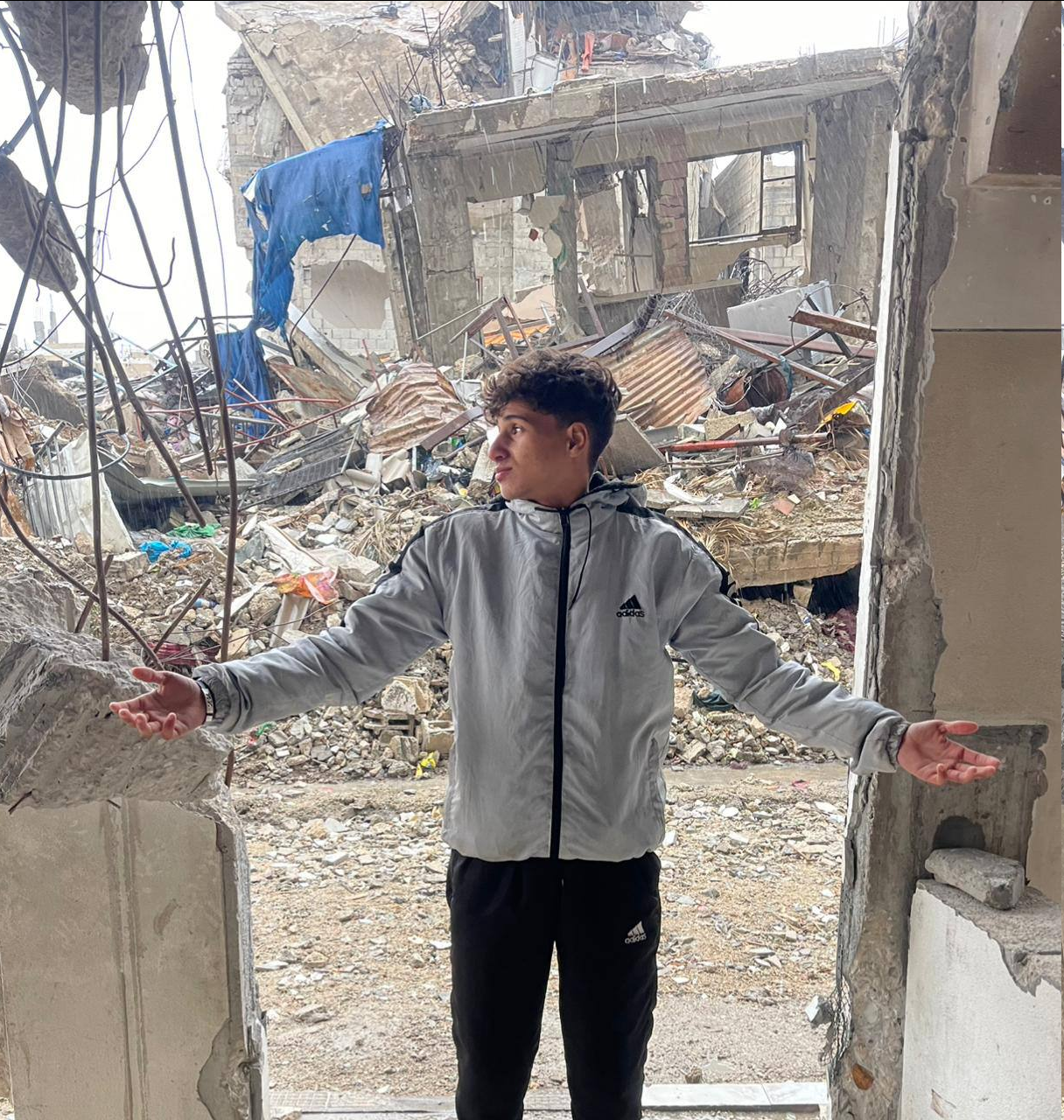
Badi is a nursing student from Gaza. Before the war, he dreamed of finishing his degree so he could help people and hear the quiet words of gratitude that made effort feel worthwhile. His teacher once told him that manhood is not in loudness, but in a heart that does not break others. On Fridays, he prayed, ate with family, laughed, drank tea, and went to the sea, a place that listened without judgment.
When he fled, he carried an ID card, a Quran, and memory. He left behind his mother’s voice, his friends’ laughter, the smell of bread in the morning. He does not speak of enemies with hatred. He speaks of pain. Dignity, he says, is what remains when everything else is stripped away. The greatest miracle he has seen is a child smiling with nothing.
He asked that his story be carried without distortion. “We are human beings,” he said. “We love, we dream, we laugh. We are not numbers.”
Helping does not begin with grand solutions. It begins with refusing abstraction. Medical organizations, food and water providers, housing cooperatives, journalists, legal advocates, mutual aid networks, and diaspora communities are already sustaining life inside collapse conditions. Their work is uneven, underfunded, and often obstructed, but it matters because it responds to real needs rather than symbolic victories.
There is also a quieter form of help: refusing to let urgency destroy discernment. Refusing to collapse into binary allegiance. Refusing to trade understanding for belonging. The system thrives on simplification. Holding complexity is a way of withdrawing consent from its narrative economy.
Writing this is not an act of neutrality. It is an act of care for reality itself, for the idea that accuracy, memory, and witness still matter even when they are uncomfortable or incomplete. Words will not dismantle the system that produces Palestinian suffering. But they can help people see it clearly enough to stop investing in its legitimacy, and to recognize where life is already being sustained inside its cracks.
That is where I am starting again.
If you want to help Badi and his family:
Badi is rebuilding his life while supporting his family in Gaza. You can contribute to their campaign here: https://gofund.me/b6f9e7c2d
Not because he is tragic, but because he is human, and humans deserve to live with dignity. If you can't give, sharing his story matters too.

Member discussion: