The Things We Make Room For
Packing my bedroom for my first home, I started noticing what things do with us: affordances, taskscapes, and the open boxes.

On packing a bedroom, living with things, and the environments that shape our lives.
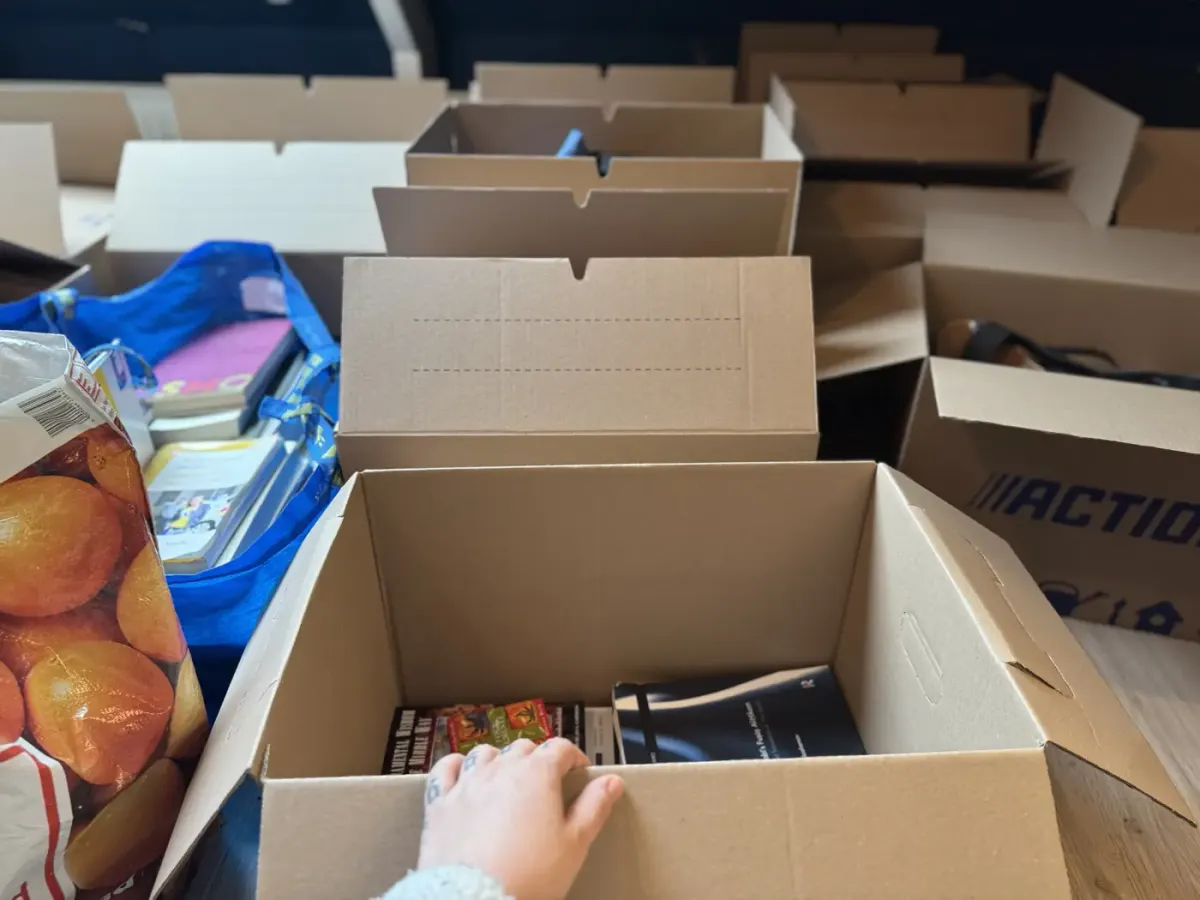
BY DAPHNE · 8 NOVEMBER 2026There are cardboard boxes everywhere in my bedroom. Some are empty, others partially filled. Books are stacked together, belongings are being sorted, and my hand rests on the edge of an open box.
I’m preparing to move into my first home.
I’ve lived among many of these things for years. They’ve occupied shelves, drawers, corners and familiar places in my everyday life. Most of the time, I haven’t given much thought to their presence. They were simply there.
But packing changes something.
An object that ordinarily sits quietly on a shelf suddenly demands a decision. Do I still want this? Why have I kept it? What place might it have in my new home?
And somewhere between filling boxes and imagining the rooms I’ll soon inhabit, I’ve begun thinking about our relationships with things. Not just what our possessions say about us, but how the things we surround ourselves with might also shape us.
The things we live with
In 1981, psychologists Mihaly Csikszentmihalyi and Eugene Rochberg-Halton published The Meaning of Things, a study of the significance of household possessions. They interviewed 80 families in Chicago about the objects they valued and the meanings attached to them.
One of their findings was a distinction between objects valued for action and those valued for contemplation. Things could be important because of what people did with them, but also because of the memories, relationships and meanings they represented.
Anthropologist Daniel Miller explored related questions in The Comfort of Things (2008), examining the lives and possessions of people living in 30 London households. His work challenges the assumption that material possessions are necessarily superficial. Objects can be deeply entangled with our relationships, histories and ways of living.
This interests me because I don’t think my relationship with a thing is exhausted by either its practical function or its sentimental value.
A book, for example, can be something I read, something I return to, something that introduces an unfamiliar idea, or something that reminds me of an earlier period in my life. Sometimes several of these relationships exist simultaneously.
And perhaps that’s what becomes easy to overlook when things remain in their usual places. We stop noticing the different ways they participate in our lives.
What a room makes possible
My new home is an interesting opportunity because I’m starting almost entirely from scratch. Even the floors need to be chosen.
I get to think about the colours, furniture, lighting, plants, books, artwork and everyday objects that will surround me. But lately I’ve been approaching these decisions differently. Rather than asking only what I find beautiful or what I need to buy, I’m wondering what kinds of relationships I want my home to make possible.
Take the kitchen. Of course, a kitchen needs to function. There must be somewhere to prepare food, store ingredients, wash dishes and eat. But I imagine something more than that.
I want familiar rituals: making tea, preparing breakfast, cooking meals I know by heart. And alongside those familiar things, I want expansiveness. Cookbooks containing recipes I’ve never tried. Ingredients I don’t yet know how to use. Art that catches my attention. Light coming through the window. Opportunities to discover something unexpected.
The same space might offer familiarity one day and experimentation the next.
Psychologist James J. Gibson developed a concept that helps illuminate this: affordances. In his ecological approach to perception, affordances are possibilities for action offered by the relationship between an organism and its environment.
A chair affords sitting. A surface might afford walking. An object can offer different possibilities depending on the abilities and circumstances of whoever encounters it.
This doesn’t mean furniture determines our behaviour. It means the environment isn’t merely a neutral background against which behaviour takes place. Its physical arrangements can make certain actions easier, harder, more available or more noticeable.
I wonder how this operates in the ordinary spaces of a home. If my books are accessible, will I reach for them more often? If my kitchen invites experimentation, will I become more adventurous with food? If a room feels restful, how might that influence the way I spend time there?
These aren’t guarantees. They’re possibilities I want to investigate.
Different kinds of relationships
I’ve realised that I don’t want every room to invite the same kind of activity. Some things can encourage curiosity and discovery. Others can provide familiarity, comfort and rest.
My bedroom doesn’t need to make me productive. I want it to be somewhere I can sleep, recover and enjoy being still.
My library can be different. I imagine books, a desk, plants and unusual objects that invite questions. A place for reading, writing and following ideas without knowing where they will lead.
And then there’s the garden.
Plants introduce a different kind of relationship altogether. Unlike a decorative object, a plant is a living organism with requirements of its own. It responds to light, water, soil, temperature and changing seasons. I might decide where to place it, but I cannot simply decide how it will grow.
A garden also involves other participants: insects, fungi, birds, microorganisms and the surrounding environment. My choices can affect them, just as their presence and needs can affect what I do.
That kind of relationship interests me because it isn’t entirely about what I want from my surroundings. It’s also about learning to notice, respond and care.
A home is something we do
Anthropologist Tim Ingold offers another way to think about this. In his 1993 essay The Temporality of the Landscape, he introduced the taskscape: the interconnected activities through which people dwell in and engage with their environments over time.
I find that perspective useful when imagining my future home.
A kitchen isn’t only a collection of cupboards and appliances. It is also the repeated activity of preparing food, washing dishes, making coffee, learning recipes and sharing meals. A garden isn’t only a particular arrangement of plants. It is watering, growing, observing, pruning, and responding to the seasons.
A home gradually becomes familiar through these activities. And I wonder whether something similar happens to us.
We develop habits in particular environments. We learn where to reach for things, where we like to sit, what draws our attention, and which activities become part of our ordinary days. The environment changes through use, and our ways of living can change with it.
That doesn’t mean objects have intentions, or that every relationship with a possession transforms us. But it does suggest that the relationship between a person and their surroundings may be more active than we ordinarily recognise.
Choosing deliberately, without controlling everything
There’s another part of this that I find important. I want to be increasingly intentional about what I allow into my space.
Not because I want everything to be perfectly organised or useful, but because I’m beginning to see my surroundings as part of the life I’m cultivating.
I want things that invite exploration. Things that provide rest. Things that preserve memories, encourage play, support rituals, or simply bring beauty into an ordinary afternoon.
And some things can be there for no grand reason at all. Not everything needs to contribute to personal development. A strange piece of art can make me smile. A comfortable chair can simply be comfortable.
Still, intention has its limits. I have a budget. The house has an existing layout. Some decisions will be practical compromises. Other choices might turn out differently from what I imagined.
I may carefully arrange a reading corner, only to discover that I prefer reading at the kitchen table. A plant might thrive somewhere unexpected. An object I thought would be important might eventually become irrelevant, while something ordinary acquires meaning through years of use.
I cannot know all of this in advance.
Perhaps that’s part of what makes a home feel alive: it doesn’t remain exactly as we first imagined it. It develops through activities, relationships, discoveries, constraints and time.
The open boxes
Looking again at the photograph of my bedroom, I’m struck by how ordinary it is. Cardboard boxes. Books. A hand resting on the edge of something unfinished.
Yet the process has made me notice a question I hadn’t previously considered so carefully. What does it mean to deliberately choose the material surroundings of a life, knowing that those surroundings may also influence how that life unfolds?
I don’t think the answer is simply to own fewer things, or to surround myself with possessions that represent the person I want to become. I’m more interested in the relationships that develop through living with them.
The familiar and the unfamiliar. Rest and exploration. Memory and possibility. Care, curiosity, comfort, beauty and the occasional unexpected discovery.
My new house already exists independently of me. It has walls, windows, floors to be installed, and a garden waiting outside. But the home I will inhabit is still developing.
I’m not expecting to design every aspect of my future life into it.
I want to make room for different ways of living, including ones I haven’t discovered yet.
For now, the boxes are still open.
And perhaps that’s a fitting place to begin.
01 · What household objects mean
Mihaly Csikszentmihalyi and Eugene Rochberg-Halton (1981), The Meaning of Things: Domestic Symbols and the Self. Cambridge University Press. Interviews with Chicago families about the objects they valued, and the distinction between things valued for action and for contemplation.
02 · Possessions and relationships
Daniel Miller (2008), The Comfort of Things. Polity. An anthropological portrait of 30 London households and the ways their possessions are entangled with relationships and histories.
03 · Affordances
James J. Gibson (1979), The Ecological Approach to Visual Perception. Houghton Mifflin. The source of the concept of affordances: possibilities for action that arise from the relationship between an organism and its environment.
04 · The taskscape
Tim Ingold (1993), The Temporality of the Landscape. World Archaeology, 25(2), 152–174. Introduces the taskscape: the pattern of activities through which people dwell in their surroundings over time.