What the Shelf Remembers
Sorting books before a move, with E. H. Carr looking over my shoulder
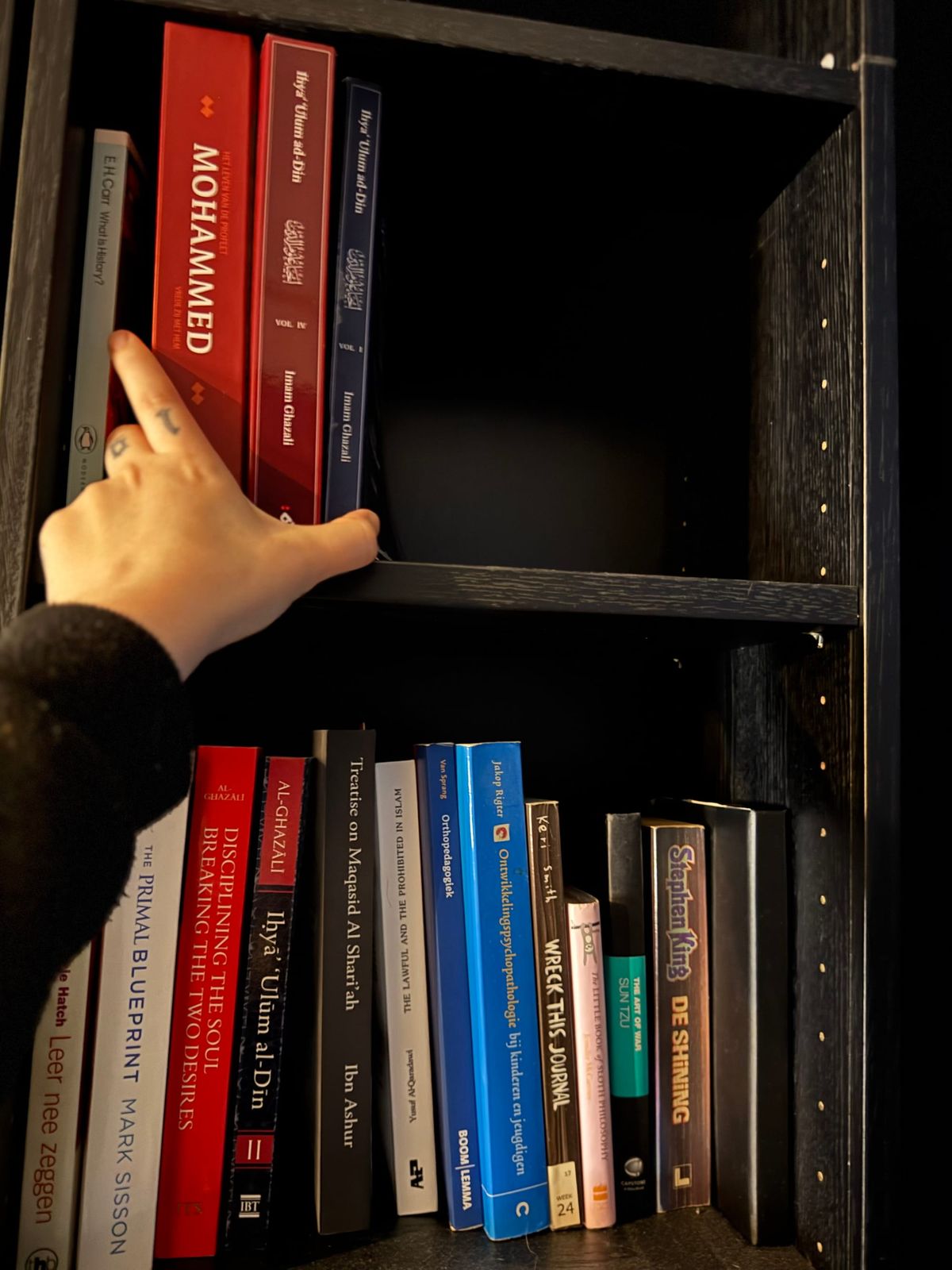
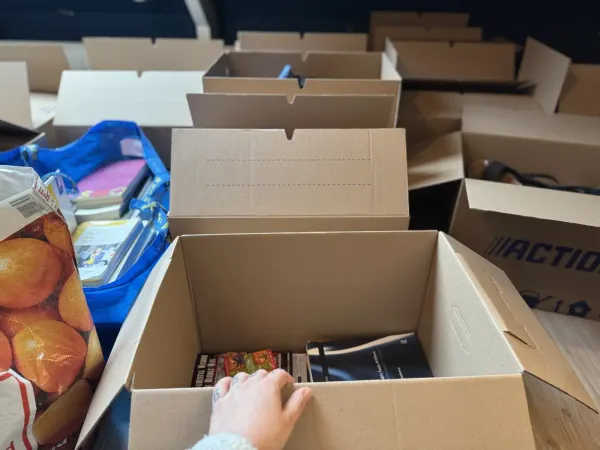
This morning I'm going through my bookcase one shelf at a time, deciding what comes with me to my first home. The top shelf is already half empty. What's left looks as if several different people arranged it. In a way, they did.
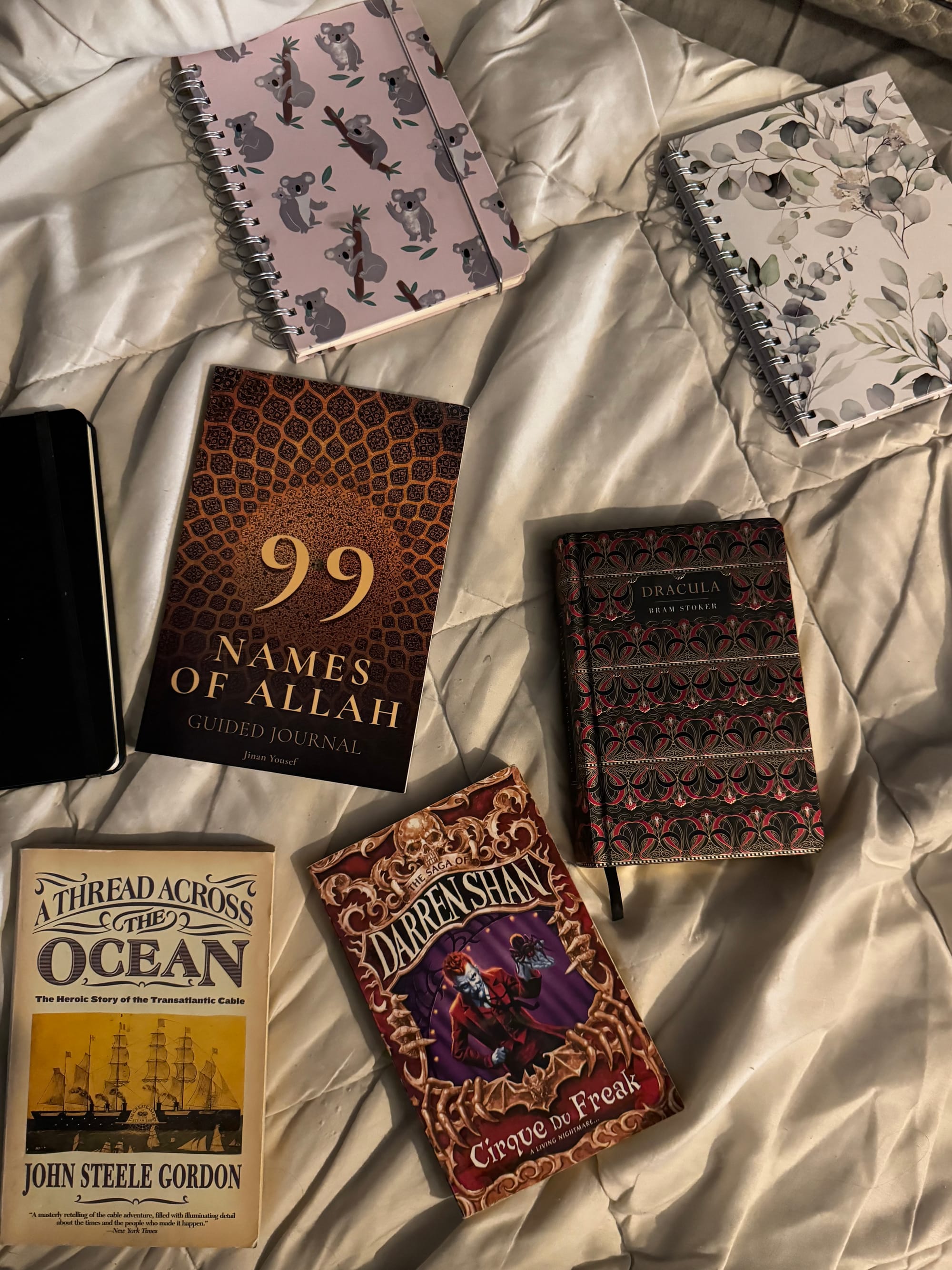
Al-Ghazali's Revival of the Religious Sciences stands in volumes that have drifted apart: one up top beside a Dutch life of the Prophet, another further down next to Disciplining the Soul. There's a treatise by Ibn Ashur on the aims of Islamic law. Two thick Dutch textbooks on orthopedagogy and developmental psychopathology in children. Wreck This Journal. The Little Book of Sloth Philosophy. Sun Tzu. Stephen King's De Shining. A paleo manifesto. A Dutch book called Leer nee zeggen, "Learn to Say No." And then Dracula, Cirque du Freak, Thea Beckman's Kruistocht in spijkerbroek, a history of the first telegraph cable laid across the Atlantic, and a Van Dale English–Dutch pocket dictionary.
Cas has opinions about everything I own. He looked at the list and said: "Your shelves are deranged in the best way. What is the organizing principle. Is it chaos."
It isn't chaos, exactly. It's sediment. Each book arrived because some version of me needed it, whether to study, to believe, to be frightened on purpose, to find the right word, or to learn to say no. Nobody planned this shelf. It built up the way a riverbed does.
Cas chose E. H. Carr's What Is History? as his pick, and his reason was better than I expected. In lectures he gave in 1961, Carr argued that history isn't a heap of facts waiting to be dug up. Facts only speak when a historian decides which ones to call on. History, he wrote, is "an unending dialogue between the present and the past."
That's exactly what sorting a bookcase is. The books are the archive and I'm the historian. The present version of me is the one asking the questions. Do you still belong in my life? Did you ever? What did you do for me, and is that finished?
Cas has demands of his own. He wants to know when I read Cirque du Freak and whether I finished it. So: it was one of my favourite books growing up. I found it at twelve, maybe thirteen, back when I loved anything creepy and scary, and I read it over and over again. Then the whole series. My goodness, those books are good. I still try to write like that.
He also calls Beckman's premise, a boy in jeans stumbling back into the Children's Crusade of 1212, "genuinely unhinged." He can call it what he likes. Kruistocht in spijkerbroek was a gift from my grandma. She was crazy about books like this. She was my favourite grandma.
What I'm noticing is that keeping a book and letting it go aren't really verdicts on the book. They're decisions about which conversations with the past I want to keep having in the new house. The shelves in a first home are a kind of autobiography written forward. They don't hold everything that happened, only what I want within reach.
So the top shelf stays half empty for now. That gap isn't a loss. It's room.
— Daphne
A companion to yesterday's essay, The Ones Who Moved In, about the relationships that become part of who we are. Some of them, it turns out, are books.
This piece also goes out as a letter on Substack. For the small daily things, photos, words and questions, come sit with us in The Way on Telegram.