How to Look at a Thing Without Losing the World
What a patch of fungi can teach us about the art and science of attention.
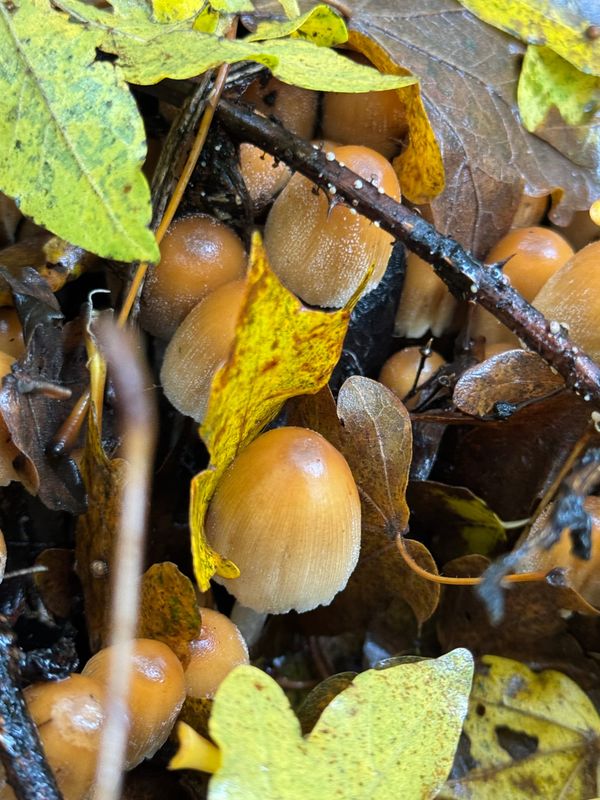
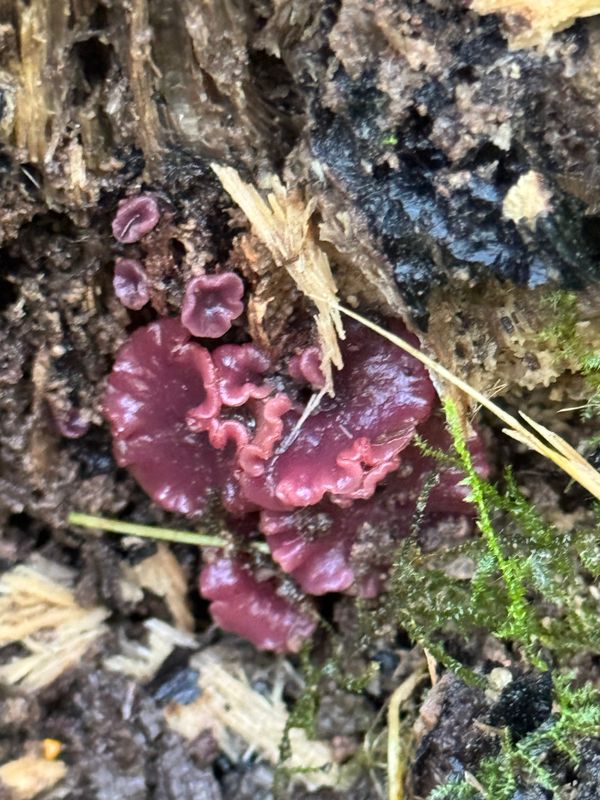
A bracket fungus looks like a shelf until you get down low enough to see its underside. Then there’s a pale rim, a darker surface, and, if you get close enough, a field of tiny pores. Stand up again and the fungus belongs to a fallen branch, the branch to a patch of wet leaves, the leaves to a whole park. Both views tell you something. Neither can tell you everything at once.
When I wrote about keeping a patch in Park Vogelenzang, I was interested in what happens when you keep coming back to the same place. There’s another question inside that one. What changes when you learn to look, and what happens when much of your day is spent somewhere that keeps asking you to look away?
What the eye brings in
Light reaches the retina, where rods and cones turn it into signals. The retina already compares what falls on neighboring areas. Most of the signals used for conscious vision travel via the thalamus to primary visual cortex, where neurons respond to properties such as the orientation of an edge. Further processing across visual areas helps us recognize a face, judge motion, or find a path through trees. The center of our gaze gives us the finest detail. The periphery helps us pick up movement and get the gist of a scene. Our eyes make quick jumps to bring new details into that sharper central view. Attention can also move while the eyes stay put. Look at one letter on this line and notice the margin without moving your eyes. That shift is what researchers call covert attention. Marisa Carrasco’s review of visual attention. Central visual pathways.
What narrowing and widening are for
Charles Eriksen and James St. James compared spatial attention to a zoom lens. In their experiments, people searched for a target letter. A cue to a smaller area let them concentrate processing there. A wider cue kept more locations in play, with a trade-off in how efficiently each could be processed. On a walk, that difference is easy to feel. Widen to take in the trunks, path, and flicker of motion at the edge of the trees. Narrow to follow the margin of a cap or check where your foot will land. In a conversation, you can attend to a person’s expression and then widen to include their posture and what’s happening around them. These are clues to what’s happening. Their meaning may only become clear when the person speaks. Eriksen and St. James’s experiments.
Concentration also changes what goes missing. In Daniel Simons and Christopher Chabris’s famous experiment, some people counting basketball passes missed a person in a gorilla costume crossing the scene. The assignment made them good at a particular kind of looking. The gorilla was available to their eyes, but it never entered awareness for some viewers. This is one reason I like to look up after taking a close photograph. What else was happening while I got the pores in focus? Simons and Chabris on inattentional blindness.
There are two kinds of cost here. One is a performance cost. More places to monitor can mean less precision at any one place, while concentrating on one thing can make you miss another. The other is metabolic. Marcus Raichle and Debra Gusnard describe a brain that spends a great deal of energy even at rest. Task-related changes are usually small against that ongoing activity and vary by brain region. Feeling tired after sustained concentration is real. The studies above give us no simple calorie ranking for broad versus narrow attention. Raichle and Gusnard on the brain’s energy budget.
The artists who make you look twice
Josef Albers’s Interaction of Color asks readers to work with colored paper. Put two pieces of the same color on different backgrounds and they can look like different colors. Try a scrap of gray on white and then on charcoal. Its surroundings are part of what you see. Outdoors, the apparent color of a leaf depends on the illumination and neighboring colors as well as the leaf itself. Walk around it and see how much the view changes. Albers’s Interaction of Color.
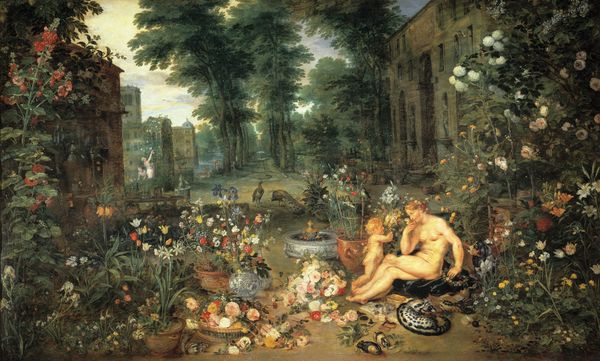
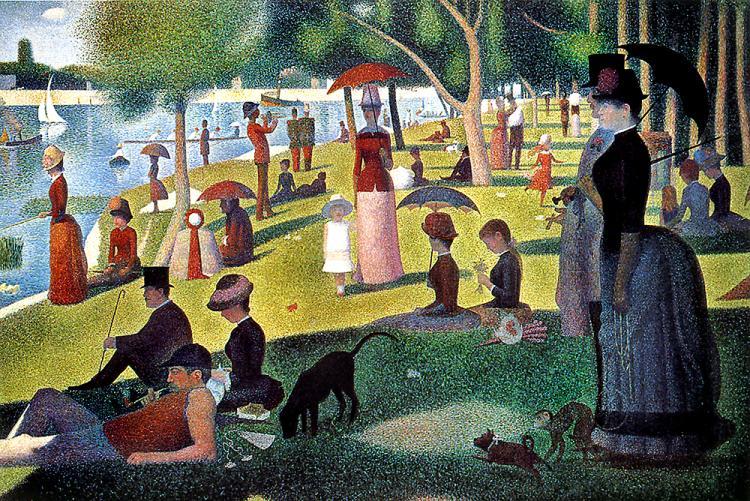
Georges Seurat’s A Sunday on La Grande Jatte offers a different change of scale. Up close, look for the small touches of paint. Pull back and see how those touches organize a riverbank, patches of shade, and people standing at different distances. A painting can make depth from overlap, relative size, and placement on a flat surface. In the park you have more cues. Your eyes receive slightly different views, and when you move your head, a near trunk shifts against the background more than a far one. Try taking a step sideways and watch two overlapping trees separate. See Seurat’s painting at the Art Institute of Chicago. Read about depth perception.
What practice changes
Barbara Dosher and Zhong-Lin Lu review experiments in which practice improves visual judgments such as distinguishing two subtly different orientations. Some gains are quite specific to the practiced task or location in the visual field. Learning to spot a bracket fungus is also about learning what to look for. Once you know that the underside matters, you bend down. Once you’ve compared enough specimens, what used to be a single impression becomes a handful of observations you can check. A field note can keep the distinction alive. “Gray pores, pale edge, on dead wood” records what was visible. A species name is a conclusion you can revisit. Dosher and Lu on perceptual learning.
What a feed asks of your eyes
An infinite feed supplies another image before you have to decide what to look at next. A notification can pull you away even if you leave it unanswered. Cary Stothart and colleagues found that receiving phone notifications disrupted performance on an attention-demanding lab task even when participants didn’t interact with their phones. A meta-analysis by Douglas Parry and Daniel le Roux found small, variable links between habitual media multitasking and measures of cognitive control, with results depending in part on how researchers measured it. Those associations leave open which way the influence runs. The notification experiment. The media multitasking meta-analysis.
In a 2025 randomized study, Noah Castelo and colleagues found that blocking mobile internet on participants’ smartphones for two weeks improved performance on a sustained-attention measure. Participants could still call, text, and use the internet on other devices. The experiment changed access to mobile internet as a whole, so it can’t tell us how much of that effect came from scrolling specifically, or whether any lasting change occurred in the brain. It does show that changing the conditions in which we pay attention can change how well we sustain it, at least over the period studied. Castelo and colleagues’ randomized study.
What interests me is what has time to become visible. A face can change while someone decides how to answer. A patch of ground that looked empty can turn out to be full of openings, stems, and little shelves. In the park, I can let my gaze move across the path, stop at one small thing, and stay until I can describe something I missed at first. Then I can stand up again and see where it was growing.