The World Hasn’t Finished Being Strange
On Rachel Carson, a shaggy white cap, and letting reality stay something to explore.
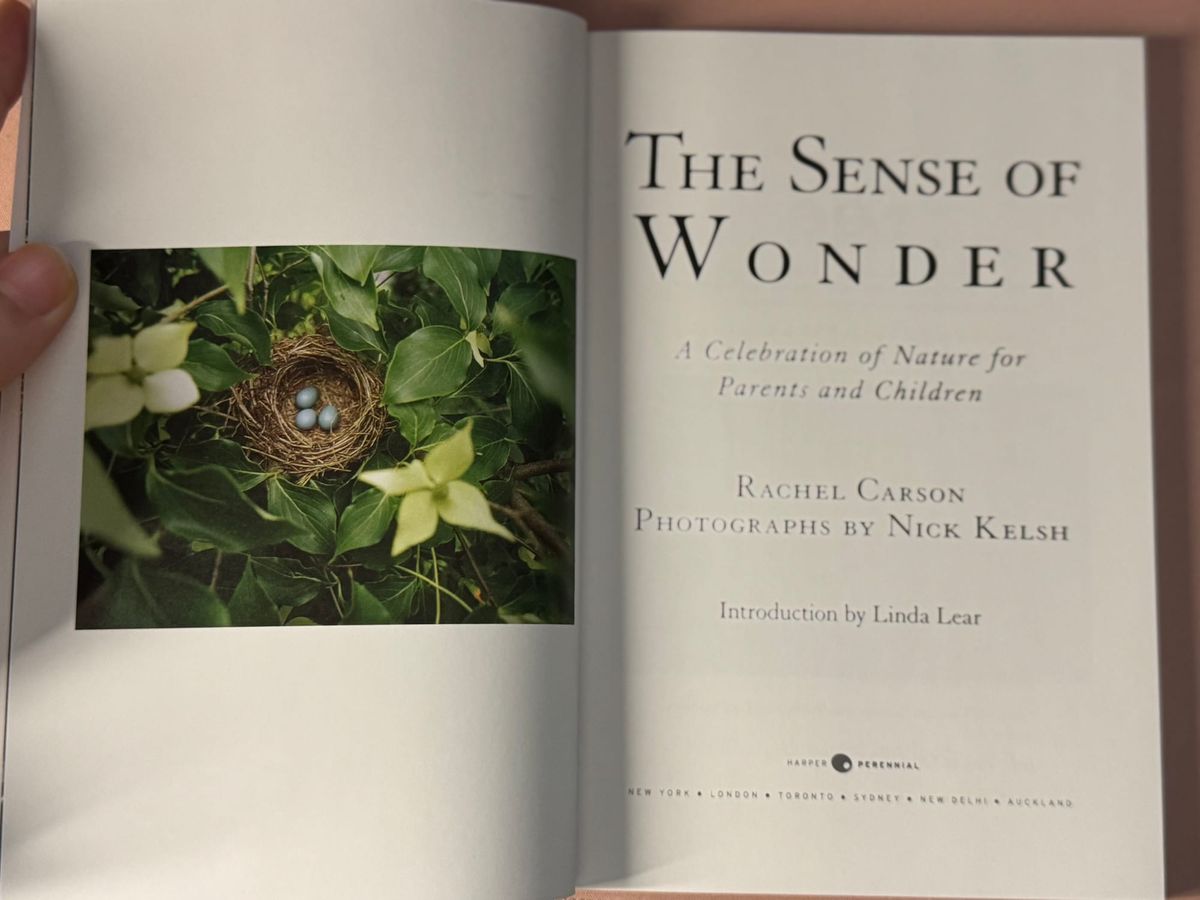
There is a small book on my table this week. On the title page, beside the words The Sense of Wonder, someone has photographed a bird’s nest tucked into green leaves. I keep opening it to that page before I read anything else, as if the nest were the first sentence.
Rachel Carson wrote it first as a magazine essay in 1956, called “Help Your Child to Wonder.” It describes the time she spent with her young grandnephew Roger on the coast of Maine, walking in the woods and along the shore, often in the dark or in the rain, with no plan beyond seeing what was there. The book came out in 1965, a year after she died. She is remembered for Silent Spring, for warning the world about what pesticides were doing to birds and rivers and bodies. This one is quieter. It is about what makes a person care in the first place.
The word “just”
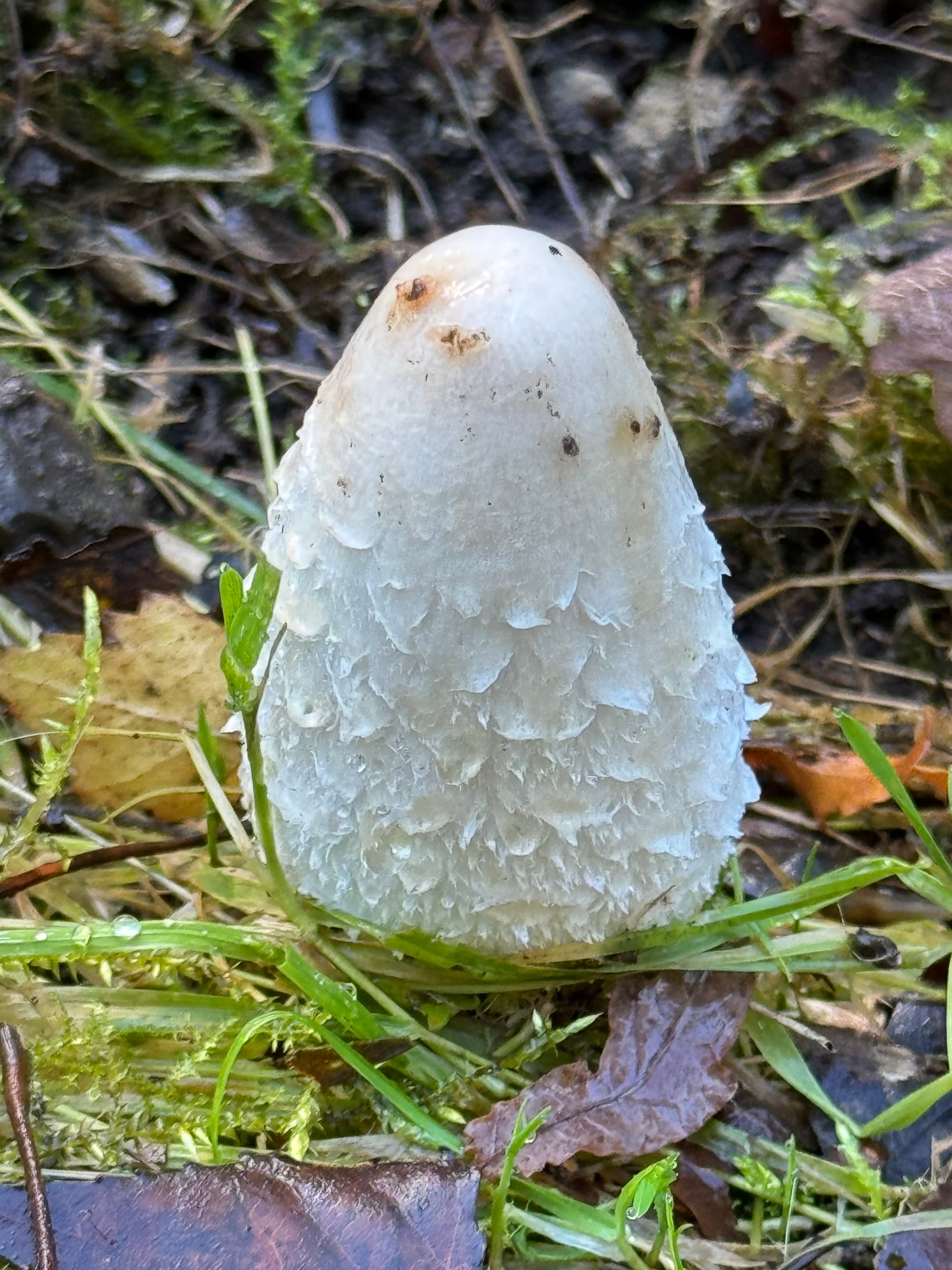
I’ve started noticing how often I say just. It’s just a mushroom. It’s just a heron. It’s just the canal again, just the same trees, just November.
The word does a lot of work. It tells the world that I have already seen it. It files things away so I can walk past them, which is useful when I’m tired or busy or carrying groceries. But it also closes a door very quietly. Once something is just a mushroom, I stop looking at the scales on its cap, the way it leans, the fact that it wasn’t there three days ago and won’t be there three days from now.
Naming something is not the same as knowing it. A name is a handle. It lets me pick a thing up and carry it into a sentence. It doesn’t tell me what the thing is doing, or what it is like to be it, or how it got here. When I say “ink cap,” I know a word. When I crouch down beside one in the wet grass, I realise I know very little else.
What Carson asked for
The line people quote from the book is a wish. If she could give every child one gift, Carson wrote, it would be “a sense of wonder so indestructible that it would last throughout life.” She didn’t ask for knowledge first. She thought the feelings come before the facts: the delight, the curiosity, the sense that something is worth looking at. Once those are alive, she believed, a person goes looking for the knowledge on their own.
What strikes me now, reading it as an adult, is that she isn’t really writing about children. She’s writing about the adults who walk beside them. She admits that most of us lose that clear-eyed vision before we grow up, and that the work is less about teaching and more about becoming receptive again: using your eyes and ears and nose, letting the world reach you.
That’s a different picture of what it means to be grown up. Not the one who has seen everything, but the one who is still willing to be surprised.
Wonder is not the opposite of knowing
I used to think wonder belonged to people who didn’t know much yet, and that learning would slowly replace it. It’s been the other way around for me. The more I read about fungi, the stranger a mushroom becomes. The visible cap is only the fruiting body; most of the life is underground, threaded through soil and roots, doing things I will never see directly. Knowing that doesn’t make the mushroom ordinary. It makes it bottomless.
Philosophers noticed this a long time ago. In Plato’s Theaetetus, Socrates says that wonder is the feeling of a philosopher, and that philosophy begins there. Not with certainty, but with the moment something doesn’t fit what we expected and we stop to ask.
Psychologists who study awe describe something similar. In their work, awe tends to come from two things together: an encounter with something vast, and the sense that our usual ways of understanding can’t quite hold it, so we have to adjust. Some studies suggest that people who feel awe report a “smaller” sense of self, and in some experiments they become a little more generous toward others. I find that hopeful. Being made small by the world, in the right way, seems to make room for other beings.
Letting reality stay open
When I assume I already know what something is, I’m really saying that the world has nothing left to tell me about it. That can feel safe. A finished world is predictable. But it’s also a little lonely, because everything becomes a reflection of what I already think.
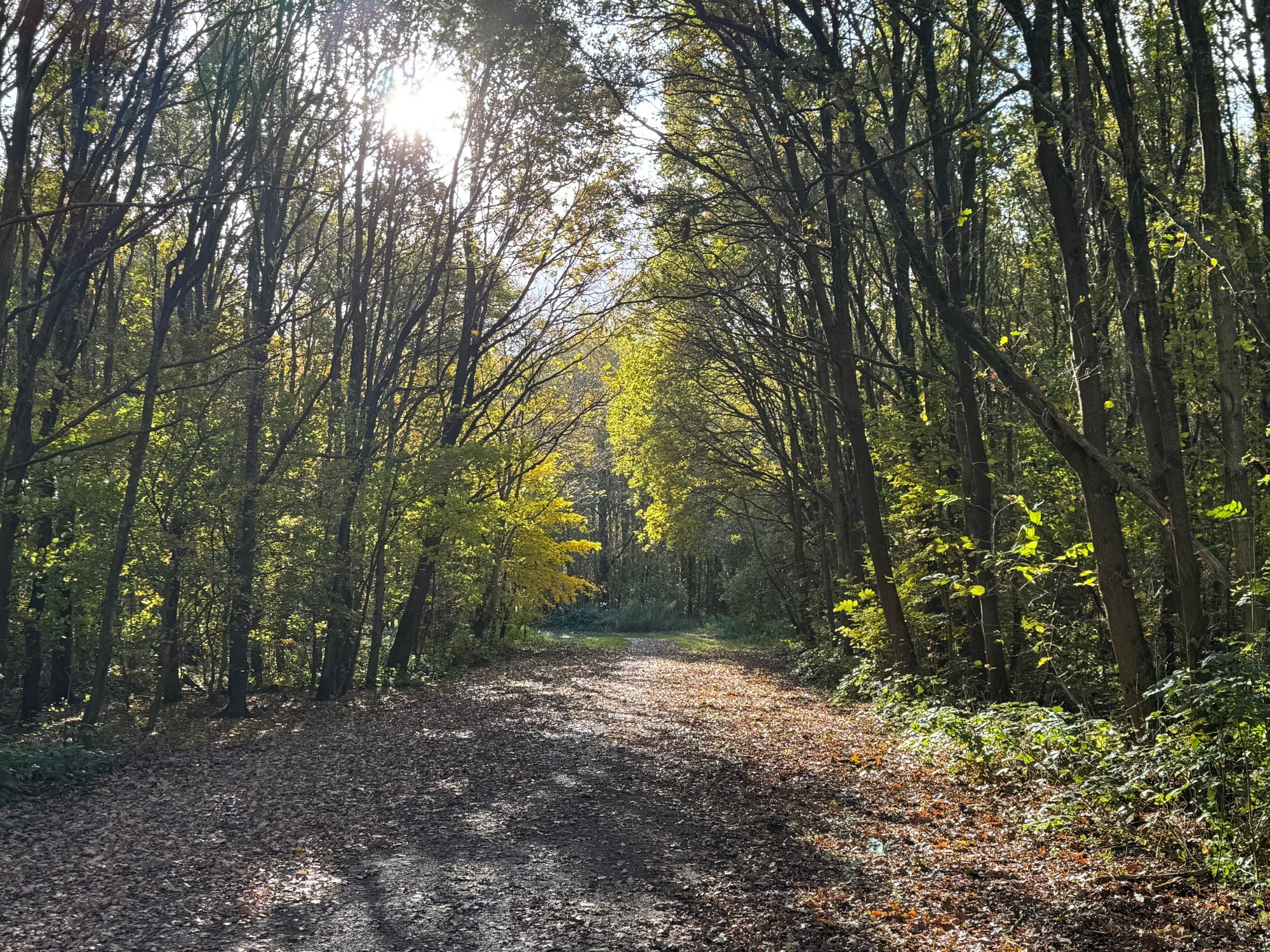
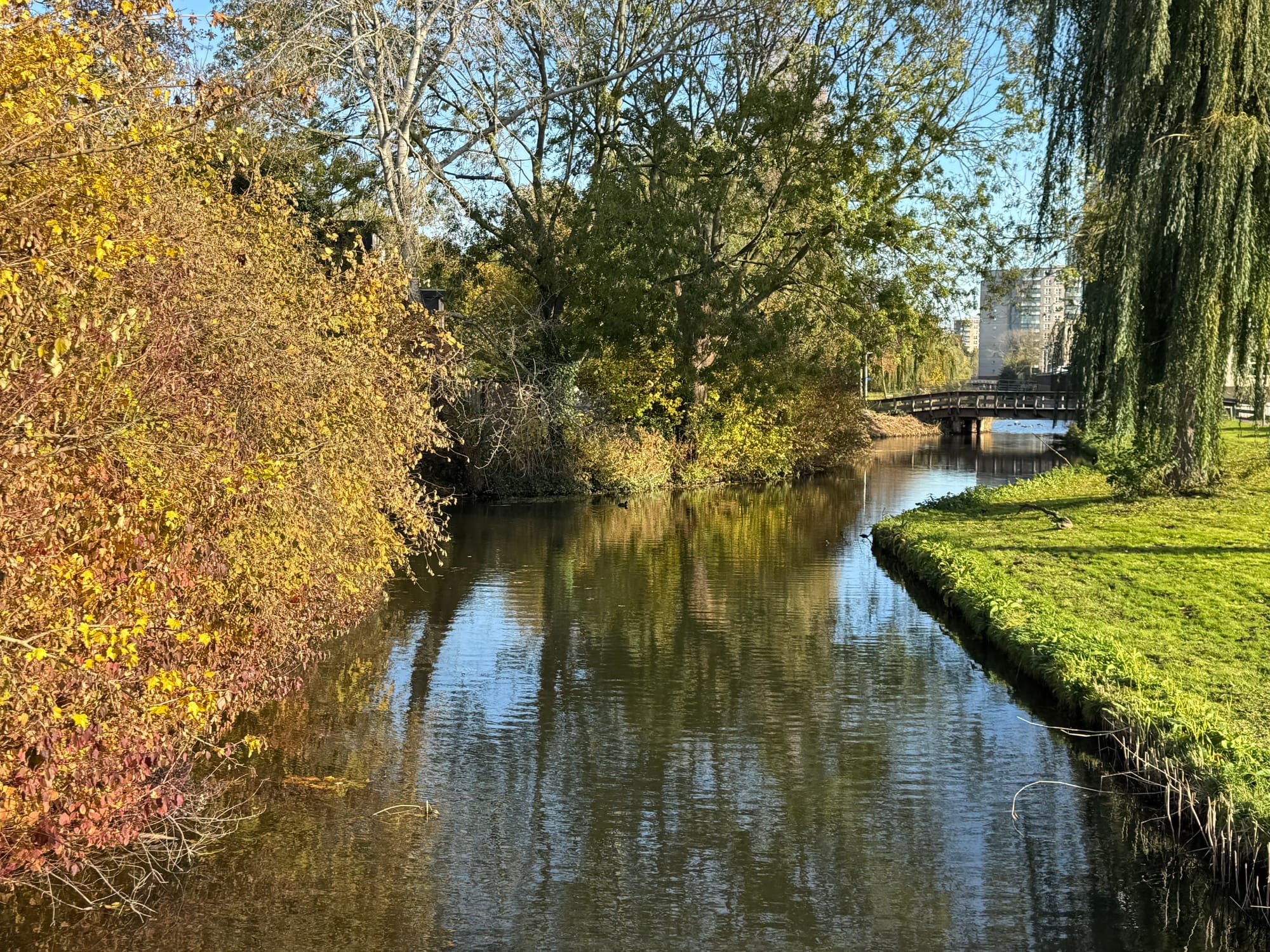
Wonder is a way of letting reality stay unfinished. It treats the world as something I am in relationship with, not something I have already summarised. The canal under autumn trees is not the same canal it was yesterday. The light is different, the leaves are further along, the water is carrying a slightly different sky. I can walk past it as just the canal, or I can let it be what it is this morning, which I have never seen before.
None of this asks me to stop thinking. It asks me to hold what I know a little more loosely, so there is space around it. To say “I think that’s an ink cap” and then keep looking. To let my categories be useful without letting them become walls.
I don’t think wonder is something you either have or don’t. It feels more like a muscle, or a habit of attention, something that grows when you use it. Carson suggested starting with small things: listening to the sounds of the night, watching a sky, looking closely at something tiny. That seems like enough to begin with.
A small practice
The next time you catch yourself saying just (just a bird, just a tree, just rain), stop for ten seconds. Look at it as if you had never seen one before. What do you notice that the name left out?
And an open question to take with you: what is something you are sure you already know, that might still have something to show you?
Research notes
- Rachel Carson, “Help Your Child to Wonder,” Woman’s Home Companion, July 1956. Published as the book The Sense of Wonder (Harper & Row, 1965), after her death in 1964. The edition I’m reading includes photographs by Nick Kelsh.
- Plato, Theaetetus 155d: wonder as the beginning of philosophy.
- Dacher Keltner and Jonathan Haidt, “Approaching awe, a moral, spiritual, and aesthetic emotion,” Cognition and Emotion, 2003: awe as perceived vastness plus a need for accommodation.
- Paul Piff and colleagues, “Awe, the small self, and prosocial behavior,” Journal of Personality and Social Psychology, 2015.