What the Earth Keeps

On fallen leaves, the work of winter, and remembering that we will die
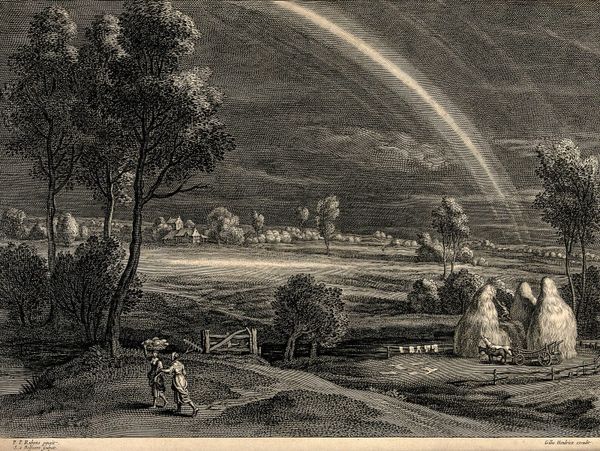
By November, the leaves underfoot have stopped looking like individual leaves. They lie in wet layers, copper over black, the newest ones still bright enough to catch what little light there is. Pull one back and you may find the outline of another, its veins intact where most of the leaf has gone. Autumn gets our attention in the branches. The slower part happens at our feet.
Under the leaves
A leaf spent the summer making sugars with sunlight. In many deciduous trees, some nutrients are drawn back into the tree before the leaf falls. What remains goes to the ground, where fungi and bacteria break it down. Small animals tear it into pieces and move it through the litter. Some of its carbon goes back into the air through respiration. Some enters the bodies of other organisms or remains in the soil. The leaf has several futures, all beginning in the same damp place.
A fallen trunk makes that process easier to see because it takes so long. Beetles can live under its bark. Fungi can grow through the wood for years. A seedling can take root on it while the trunk is still recognizably a tree. Walk past the same log often enough and its outline will soften. Eventually there may be a low ridge under the moss, with saplings growing in a line where a single tree used to stand.
Earth’s living systems keep going in part because matter passes among bodies. Sunlight supplies much of the energy that powers the exchange. The atoms themselves can be used again. The woodland takes the leaf apart and keeps working with what it finds. That is one sense in which we give back to the place that formed us. We have always been made of things that were here before us.

The person we miss
Van Gogh gives the skeleton a cigarette. The tilt of the head and that familiar human gesture make the bones look companionable for a second. There is a little ember at the end of the cigarette. It seems particularly alive against all that dark paint.
There are two scales to death, and it is possible to feel both in one afternoon. A body belongs to the same material world as the leaf and the fallen tree. A person also belongs to the small world of people who knew how they took their coffee. The woodland can make use of everything it receives. Someone at a kitchen table may still turn toward the door at the hour the person used to come home.
What remembering changes
Montaigne wrote about learning to die as a way of loosening fear’s hold on the life he was already living. In Being Mortal, surgeon and writer Atul Gawande brings the question into the room where a patient and a doctor have to decide what to do next. How much would a person endure for a chance at more time? What would make that time worth having? An answer might be as ordinary as being able to sit at one’s own table. It can change what good care looks like.
There is a practical tenderness in talking about death while there is time to hear an answer. You can find out what matters to somebody in their own words. You can ask about a photograph whose faces you recognize but whose names you have never known. You can learn who a person hopes will be in the room if things get difficult. Some answers will change. A conversation can be had again.
Remembering death can also make an ordinary day easier to see. The kettle goes on. Someone stays a little longer in the doorway. There are things worth doing badly for the pleasure of having done them, and afternoons worth spending with someone who has already told you the story. We have a finite amount of time, and some of the best of it will look, from the outside, like very little happened.
Into winter
When the cold comes, decomposition usually slows. Under the leaf litter there is still work going on whenever conditions allow it. Above ground there will be bare branches and a much longer view through the woods.
One afternoon this winter, the leaves will be too wet to make a sound underfoot. There might be one copper leaf still on a branch, turning in the wind. The next time you pass, it may be down among the others. You could go back in March and look under the hedge. Some of the leaves will still be there. From underneath them, something green will have found its way up.
Further reading · USDA Forest Service on fallen trees and nutrient cycling · Montaigne on learning to die · Atul Gawande’s Being Mortal
Also available on The Living Fractal on Substack.