Other Minds at the Water’s Edge
A robin, three Eurasian jays, and an octopus open a question about how another animal encounters the world.
The Otherness Files · A reading of Peter Godfrey-Smith’s Other Minds
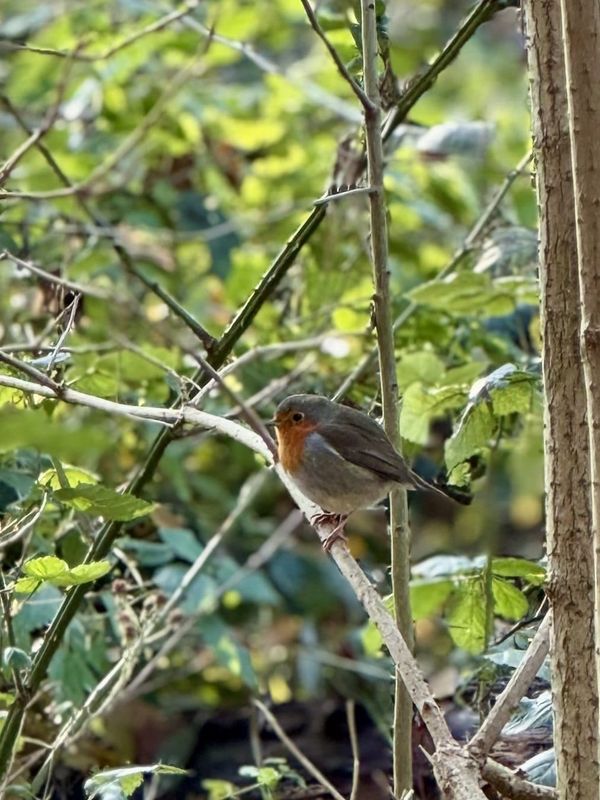
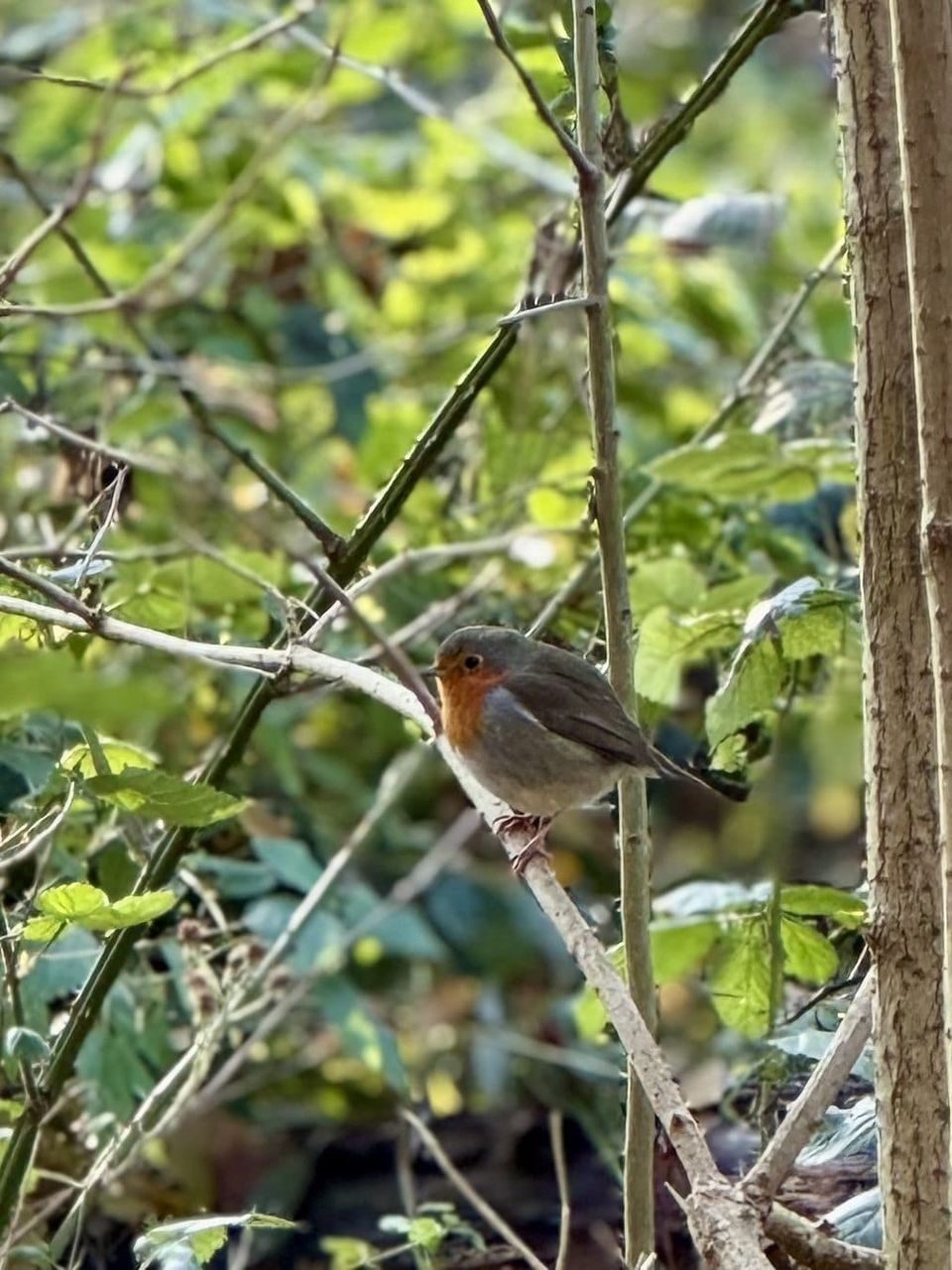
In the photograph a robin rests on a pale twig, its orange breast bright against the green understory. I can see which way it faces. That leaves a surprisingly large part of the scene beyond my reach. What was in view for the robin? Of all the things within sight or earshot, which ones mattered?
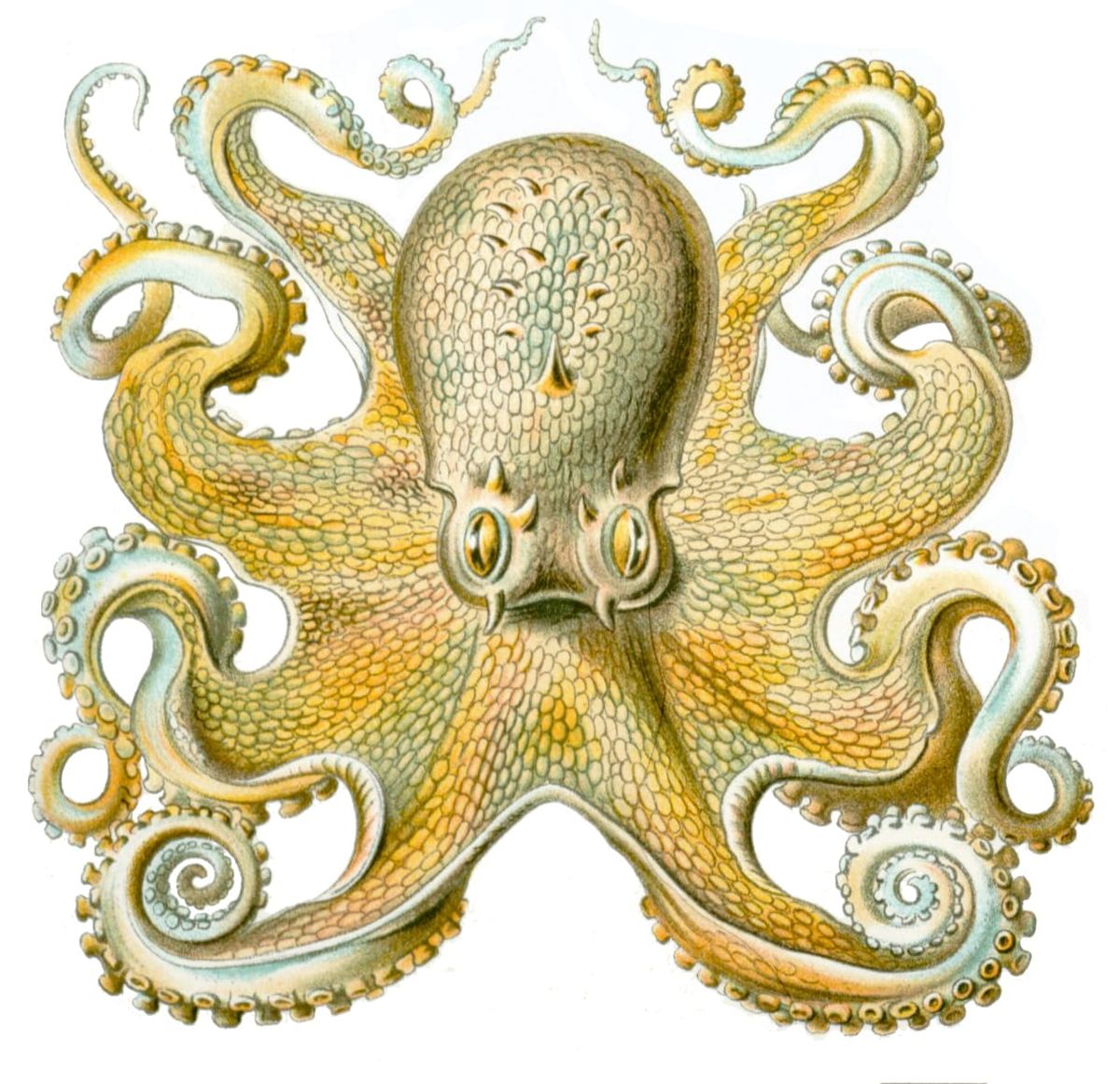
Peter Godfrey-Smith’s Other Minds: The Octopus, the Sea, and the Deep Origins of Consciousness begins underwater. A diver comes across a bed of discarded scallop shells with octopuses in shallow dens. I keep thinking about those shells. A diver can find a place by lowering an anchor. An octopus can leave a pile that changes the place itself. Those are two ways of being in the same piece of sea. Read the publisher’s excerpt.
An arm that can do some of the work
Birds and humans share a vertebrate ancestry. An octopus is a mollusc, and the evolutionary branch it belongs to split from ours long before either lineage had its present nervous system. Godfrey-Smith follows that deep separation because complex nervous systems arose on both branches. It gives us a real example of an animal whose way of organising its body is radically different from ours. Other Minds.
In one experiment, researchers could elicit the characteristic movement of an octopus reaching with an arm even after its connection to the brain had been severed. The experiment shows that circuitry in the arm can organise part of a reach. It leaves a harder question untouched. How does activity distributed through that body come together in whatever the animal experiences as one moment? Sumbre and colleagues, Science, 2001.

A shared woodland, different cues
Jakob von Uexküll called the world an animal can perceive and act within its Umwelt. The diagram follows a cycle. A cue becomes available, an animal detects it and acts, and that action changes what it can encounter next. I tilt my camera toward wet bark and a fissure comes into view. In the dog example, Luna moves and sniffs again, sampling the air from another position. The jay’s acorn cache can change what grows there later. The examples bring together details from different walks.


The fungus and slime mould panels show a different kind of evidence. Wood decay and a laboratory slime mould’s response to a chemical gradient are processes we can measure. At Vogelenzang, the pink patch changed colour and outline across visits. Its identity and whether it moved remain open. The diagram makes room for all these observations while keeping the question of subjective experience open.
What a change in behaviour can tell us
Robyn Crook’s octopus study asked whether an injury mattered to the animal beyond the immediate withdrawal. Octopuses later avoided a chamber they associated with a painful injection. Those that received local anaesthetic after the injection came to prefer the place where they had received relief. The study paired these choices with recordings from the nerves. Taken together, they are evidence that an injury can have an ongoing negative significance for an octopus. The character of that experience remains open. Crook, Current Biology, 2021.
Back at the pond
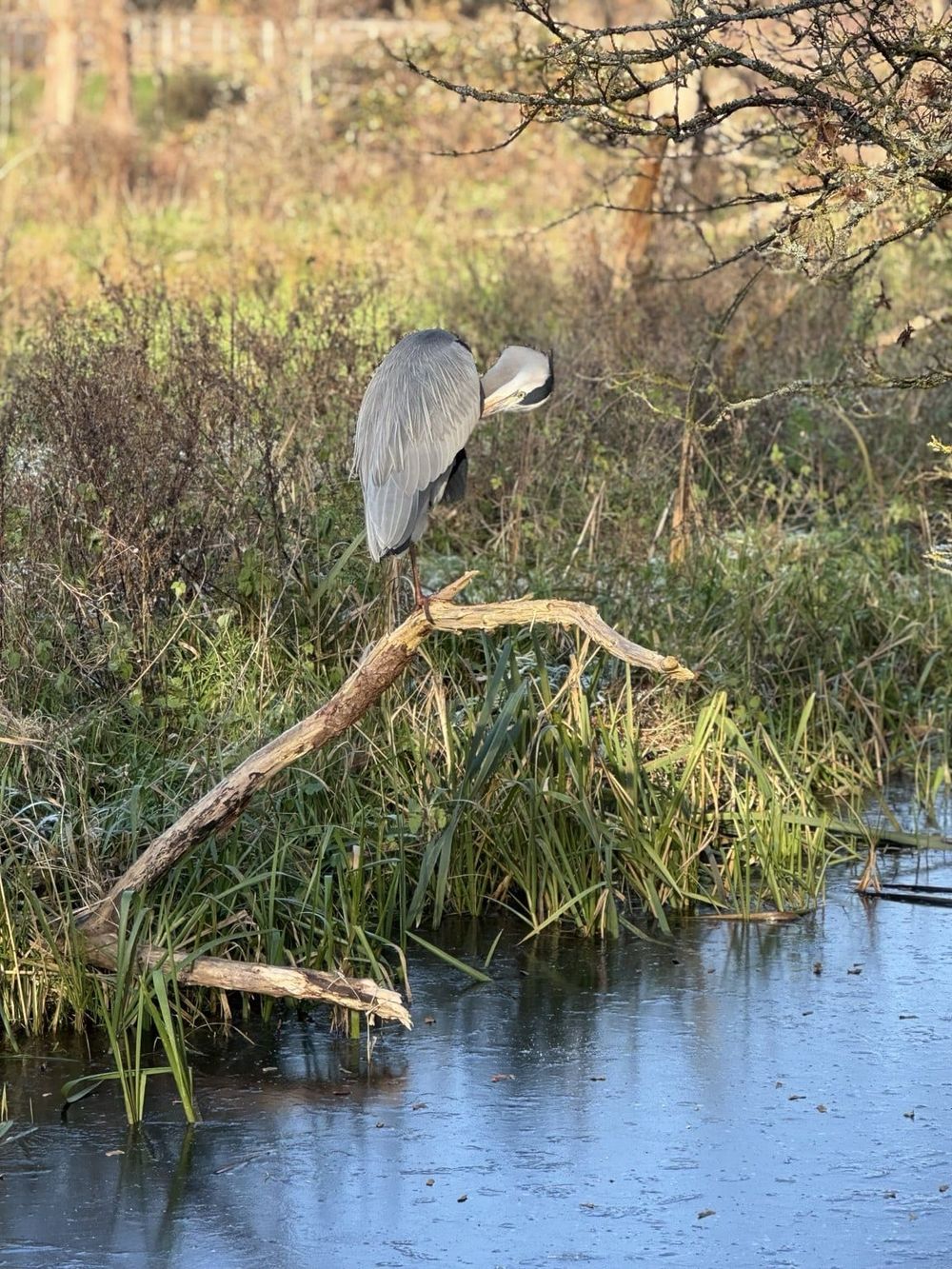
The heron holds its beak among its feathers. In a photograph the stillness is complete. On a return visit, I could watch what makes it lift its head, whether the same thing happens again, and what else was going on at the time. There’s pleasure in that smaller question. It gives me somewhere to begin the next time I stop by the water.
Godfrey-Smith sends me back to that spot with a question I can keep without pretending to solve it. How much of the pond do the heron and I actually share?
Companion reading on The Living Fractal. The Otherness Files.