In the Gaps, Reality Streams Back In
On Iris Murdoch, a dog beneath a blanket, and the art of looking again.
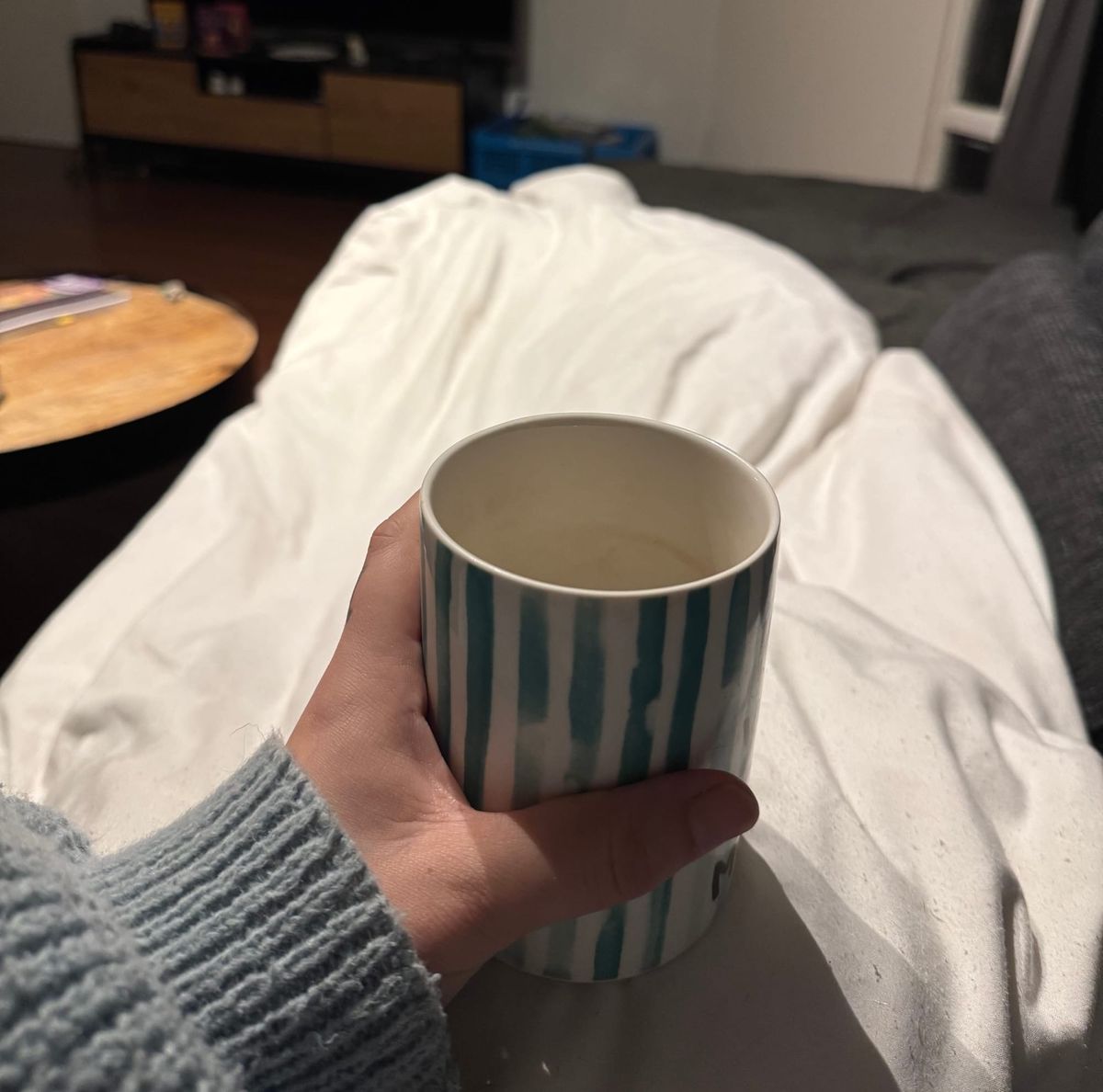
This morning, I was sitting beneath a white blanket, holding a striped mug. The television was dark. A little light illuminated the room, and somewhere beneath the folds of the blanket was my dog.
I couldn’t actually see her.
I could see the shape she made underneath the fabric, and yet I immediately knew she was there. I thought about how adorable she was. I wondered whether she was cold, whether she wanted warmth, whether she simply enjoyed being close to me.
I felt affection for her.
It was such an ordinary moment that I could easily have overlooked what was happening.
I wasn’t simply seeing a shape beneath a blanket. I was encountering something familiar through an entire history of experiences, memories, expectations, and affection.
My mind was making sense of what I saw.
And then I became curious about something.
How much did I actually know, and how much was I interpreting?
I knew my dog. I recognized her habits, her movements, the little things she did. I knew that I loved her.
But did I know she was cold? Did I know what she was experiencing beneath that blanket? Did I know precisely how she experienced my affection?
Not really.
And yet, this didn’t suddenly make her unfamiliar.
She was still my dog. I still knew her. I still loved her.
I had simply become more aware of the limits of my knowledge.
Strangely enough, I found that beautiful.
The stories we live through
Human beings are extraordinary interpreters.
We don’t move through the world collecting isolated sensory fragments, waiting to assemble them into something meaningful.
We recognize patterns. We anticipate. We draw upon previous experiences. We make inferences about things we cannot directly observe.
We see a familiar shape beneath a blanket and recognize a dog.
We notice someone’s silence and wonder whether they’re upset.
We encounter a stranger and begin forming impressions from their clothing, gestures, words, and expressions.
Much of this is useful. We couldn’t function without the capacity to interpret incomplete information.
But there’s something worth noticing.
Our interpretations can become so familiar that we stop recognizing them as interpretations.
We begin to experience them as though they were reality itself.
Someone doesn’t reply to a message.
Perhaps they’re busy, exhausted, distracted, or uncertain about what to say.
But I might interpret their silence as rejection.
And if I have experienced rejection before, that interpretation may feel especially convincing.
I might then become distant or defensive. The other person notices my behavior and withdraws. Suddenly, the relationship itself begins changing.
An interpretation has become part of the interaction.
It doesn’t mean I invented everything. Perhaps the person really was rejecting me.
But I cannot know that simply because my interpretation feels coherent.
And that distinction matters.
Because our concepts, expectations, and stories aren’t passive descriptions of reality.
They can influence what we notice, how we feel, what we do, and how other people respond to us.
We don’t merely look through our conceptual frameworks. We live through them.
And in living through them, we are changed.
Iris Murdoch and the art of looking again
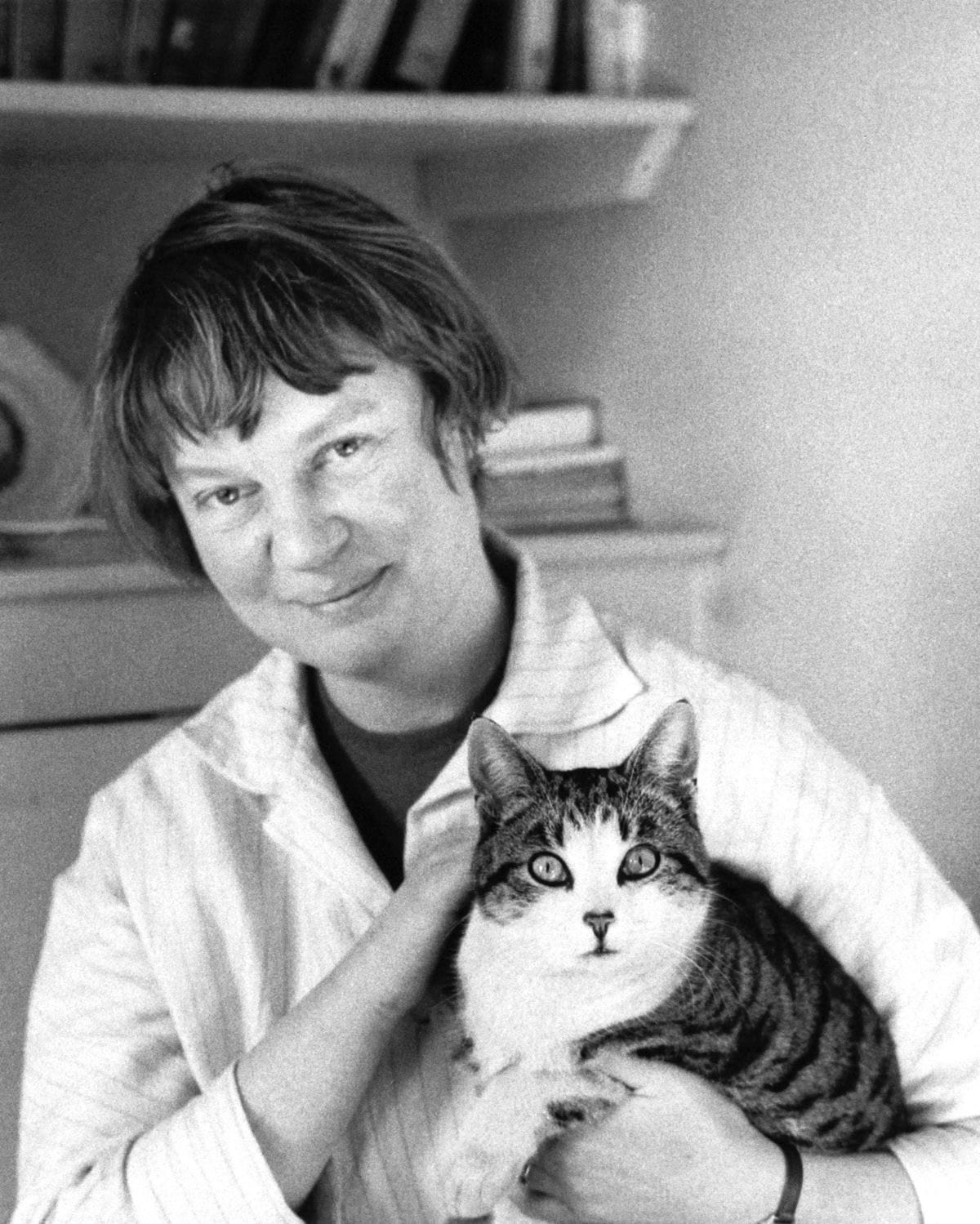
This brought me to the philosopher Iris Murdoch.
In her essay The Idea of Perfection, later collected in The Sovereignty of Good, Murdoch describes a mother-in-law who dislikes her son’s wife.
The older woman finds her daughter-in-law immature, vulgar, irritating, and insufficiently refined.
Yet she behaves politely toward her.
Nothing in her outward conduct reveals her disapproval.
Later, however, she begins reconsidering her interpretation.
Perhaps she is being snobbish. Perhaps she is jealous. Perhaps her expectations are preventing her from appreciating this younger woman.
Murdoch gives her a wonderfully simple instruction:
“Let me look again.”
And gradually, her understanding changes.
What previously appeared vulgar begins to look refreshingly simple. What seemed immature begins to appear youthful. What she interpreted as a lack of dignity may actually be spontaneity.
The daughter-in-law hasn’t necessarily changed.
The mother-in-law has begun seeing her differently.
Murdoch argues that this transformation matters morally, even before it produces any outward change in behavior.
She calls this kind of effort attention.
Not merely looking, but trying to look justly and lovingly at something that exists independently of our prejudices and fantasies.
I find this remarkable.
Because morality, in this understanding, isn’t exclusively about the decisions we make or the rules we follow.
It also concerns the quality of attention we bring to other beings.
And importantly, Murdoch isn’t suggesting that we should simply replace negative judgments with positive ones.
Sometimes looking closer reveals that our suspicions were justified.
A person may genuinely be dishonest, cruel, or inconsiderate.
The point isn’t to make reality more pleasant.
The point is to become more willing to see what is actually there.
When a framework becomes a world
This discovery has also made me reconsider my own relationship with existence.
For many years, I was searching for something absolute.
I believed there had to be an ultimate truth, something that could finally resolve my questions about reality and provide complete certainty.
I imagined that somewhere in the future, I might arrive at an understanding that would make everything intelligible.
And in the meantime, I was deeply dissatisfied with existence.
I noticed suffering, disappointment, cruelty, uncertainty, and the many ways reality failed to resemble what I believed it ought to be.
These things weren’t imaginary.
Suffering was real.
Injustice was real.
My disappointment was real.
But I was doing something else with these experiences.
I was interpreting them as evidence that reality itself was fundamentally wrong.
And in doing so, I began overlooking other aspects of existence.
The ordinary tenderness of relationships. The ridiculous habits of human beings. The complexity of living organisms. The pleasure of discovering something new.
Even when I encountered beauty or affection, it often felt hollow.
None of it was enough.
But enough for what?
I was asking particular experiences to provide an absolute justification for existence.
A friendship could not accomplish that.
A beautiful landscape could not accomplish that.
Neither could a warm cup of coffee or the affection of an animal.
And perhaps they were never supposed to.
When I began recognizing the limitations of that framework, something slowly changed.
I didn’t suddenly conclude that reality was fundamentally good.
I didn’t discover an explanation that eliminated suffering.
And I certainly didn’t solve my depression through philosophy.
Instead, I became interested in a different possibility.
What if reality doesn’t need to become something else before I can begin relating to it differently?
What if I can encounter what actually exists, with all its contradictions, without demanding that it satisfy a final theory?
Suffering happens.
So does pleasure.
Nausea, boredom, exhaustion, affection, curiosity, disappointment, laughter, and wonder.
Some experiences invite resistance. Others invite appreciation. Many are simply ordinary.
And perhaps I don’t need to transform all of them into evidence for one grand conclusion about existence.
Perhaps I can look closer.
Different eyes, different discoveries
Consider something as ordinary as a dog.
A poet might notice the way sunlight catches her fur, the softness of her breathing, or the strange tenderness of watching another creature sleep.
A biologist might investigate her physiology, sensory capacities, behavior, or evolutionary relationships.
A historian might recognize the long history of human-animal companionship, the domestication of dogs, and the cultural practices through which humans have come to treat animals as members of their families.
Each perspective brings different questions into focus.
They aren’t necessarily competing descriptions.
Nor are they all equally supported simply because they offer interesting interpretations. Scientific and historical claims still require evidence, and poetic expressions do something different from empirical explanations.
But they can all expand our capacity to notice.
A conceptual framework can act like a pointer. It directs our attention toward aspects of reality we might otherwise overlook.
And learning can change what we’re capable of perceiving.
It can make an ordinary object more interesting.
An unfamiliar person more understandable.
A familiar relationship more complex.
A single moment more richly textured.
Even our experience of time can change.
A calendar presents days as tidy, standardized squares. Yet no two days are identical in how we live them. Each carries different experiences, memories, anticipations, and possibilities.
The calendar remains useful.
But it doesn’t capture everything that time is like to experience.
Perhaps the mistake is not that we use frameworks.
It’s that we sometimes forget what they are.
They illuminate aspects of reality without necessarily exhausting it.
The strange alchemy of attention
What fascinates me most is that these frameworks don’t leave us unchanged.
If I repeatedly approach reality as something fundamentally inadequate, I may become increasingly attentive to disappointment.
If I expect people to be dangerous, I may interpret ambiguous behavior defensively.
If I believe the present is merely an obstacle on the way to a better future, I may overlook experiences that are available to me now.
But suppose I approach the world with curiosity.
Not naive optimism.
Not the belief that everything is beautiful or good.
Simply the willingness to investigate what is actually there.
I might begin noticing unfamiliar patterns. I might ask different questions. I might discover that another person doesn’t fit the categories I had assigned them.
Those experiences can challenge my expectations.
And the way I respond may gradually influence the habits I develop.
This is why the idea of formation has become so interesting to me.
Religious traditions, including Christianity, have long been concerned not only with what people believe, but with how repeated practices shape their attention, desires, conduct, and character.
Prayer, contemplation, confession, gratitude, and acts of care can be understood, among other things, as practices that cultivate particular ways of relating.
Of course, their effects are not automatically beneficial, and the fact that a practice transforms someone doesn’t establish that its theological claims are true.
But the underlying question interests me enormously:
What kind of person am I becoming through the ways I repeatedly attend to and engage with reality?
Not because I need to manufacture a perfect version of myself.
But because I am already being shaped through living.
By what I encounter.
By what I practice.
By what I believe.
By what I notice, ignore, question, and love.
And perhaps becoming more conscious of this process allows me to participate in it more deliberately.
In the gaps, reality streams back in
So I return to my dog beneath the blanket.
I know her.
I have spent enough time with her to recognize her habits, understand some of her preferences, and appreciate the little creature she is.
But I don’t know everything about her.
There are gaps in my understanding.
And here is the thing that has surprised me most.
Those gaps no longer have to feel like failures.
They can be openings.
I can allow myself to wonder what she’s experiencing without immediately deciding that I know.
I can observe her behavior and discover something new.
I can remain affectionate without confusing affection with complete understanding.
And I can recognize that another living being exists beyond my interpretation of her.
This is not an argument for permanent doubt.
There are things we can know with considerable confidence. There are circumstances in which evidence justifies firm conclusions. There are relationships where recognizing repeated harm matters far more than searching endlessly for alternative explanations.
Openness doesn’t require abandoning judgment.
It requires allowing our judgments to remain answerable to reality.
And this might be what I find most beautiful about Murdoch’s philosophy.
To look again is not to erase everything we already know.
It is to recognize that what we know does not necessarily exhaust what there is to discover.
A person can be familiar and still surprise us.
A place can be ordinary and still contain relationships we haven’t recognized.
A concept can be useful without becoming the final word.
And an encounter can be meaningful without providing absolute certainty.
For a long time, I experienced the limits of my knowledge as something frightening.
I thought I needed to close the gaps.
To find the final explanation.
To arrive somewhere beyond uncertainty.
Now I’m beginning to wonder whether those openings are also what make continued discovery possible.
Perhaps there will always be something I haven’t noticed.
Something another person can teach me.
Something a different discipline can illuminate.
Something that challenges what I thought I knew.
And perhaps that is not simply a limitation of being human.
It is also part of the extraordinary experience of being alive.
This morning, I am holding a striped mug.
There is light falling across a blanket.
Underneath it is a small animal whom I know and love, but whose inner world I cannot fully possess.
Nothing extraordinary needs to happen.
I can simply look.
And look again.
And in those gaps, reality streams back in.
Further reading: Iris Murdoch, The Idea of Perfection, in The Sovereignty of Good (1970); Maurice Merleau-Ponty, Phenomenology of Perception (1945); and the Stanford Encyclopedia of Philosophy entry on Iris Murdoch.