The Seams Are Showing
Marisol’s assembled figures, a museum afternoon, and a reflection on bodies, relationships, and the tenderness of being unfinished.
Today I kept thinking about seams.
Not the neat kind that disappear into a finished garment, but the visible ones. The joins. The awkward places where one material stops and another begins. The bits that remind you that something has been assembled rather than born complete.
I had gone to the museum and encountered the work of Marisol—María Sol Escobar, born in Paris to Venezuelan parents, who became a distinctive figure in postwar New York art. Her sculpture drew on Surrealism, Pop, assemblage and folk-art traditions, but never sat comfortably inside just one category. That already feels appropriate.
Her people are not polished into classical perfection.
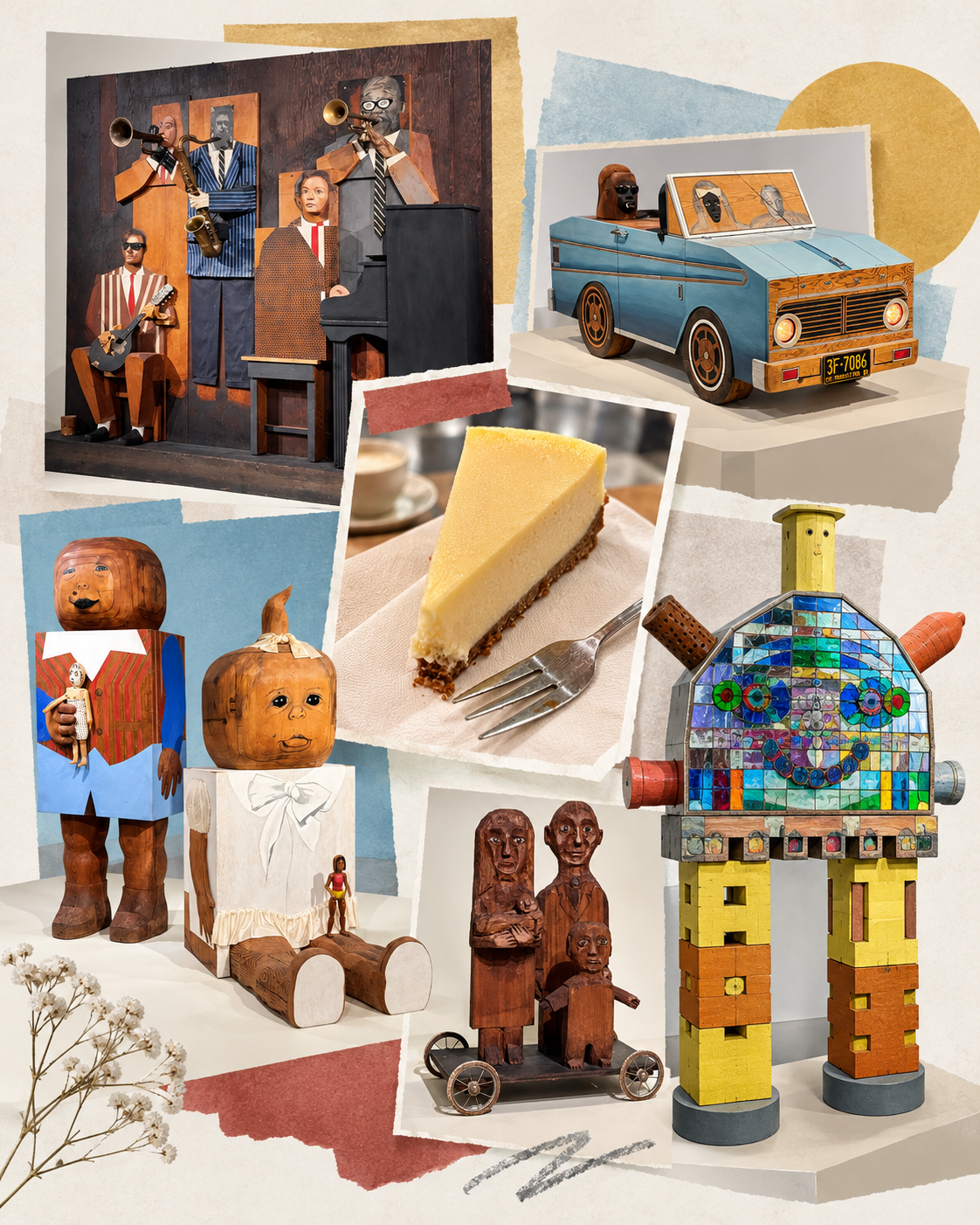
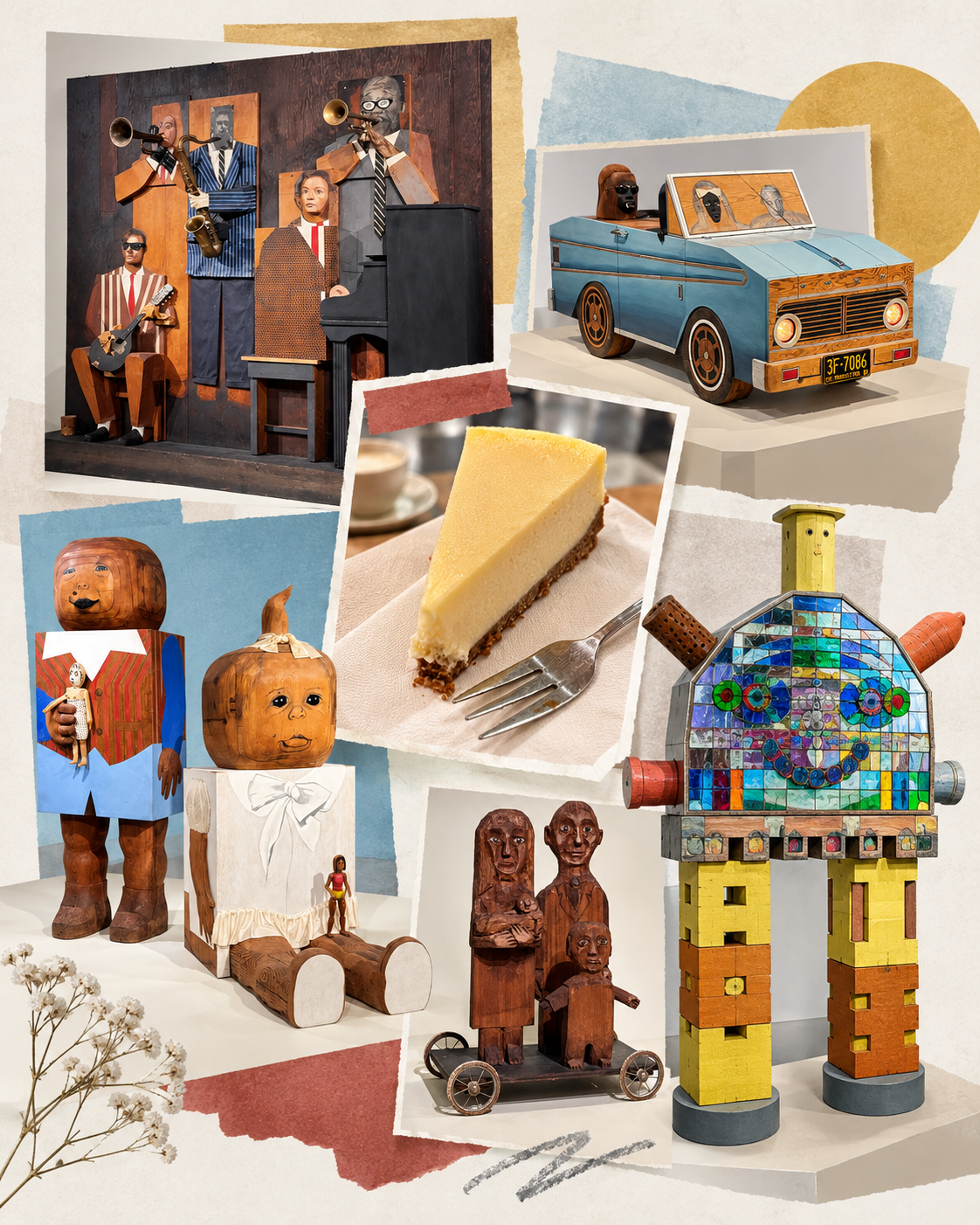
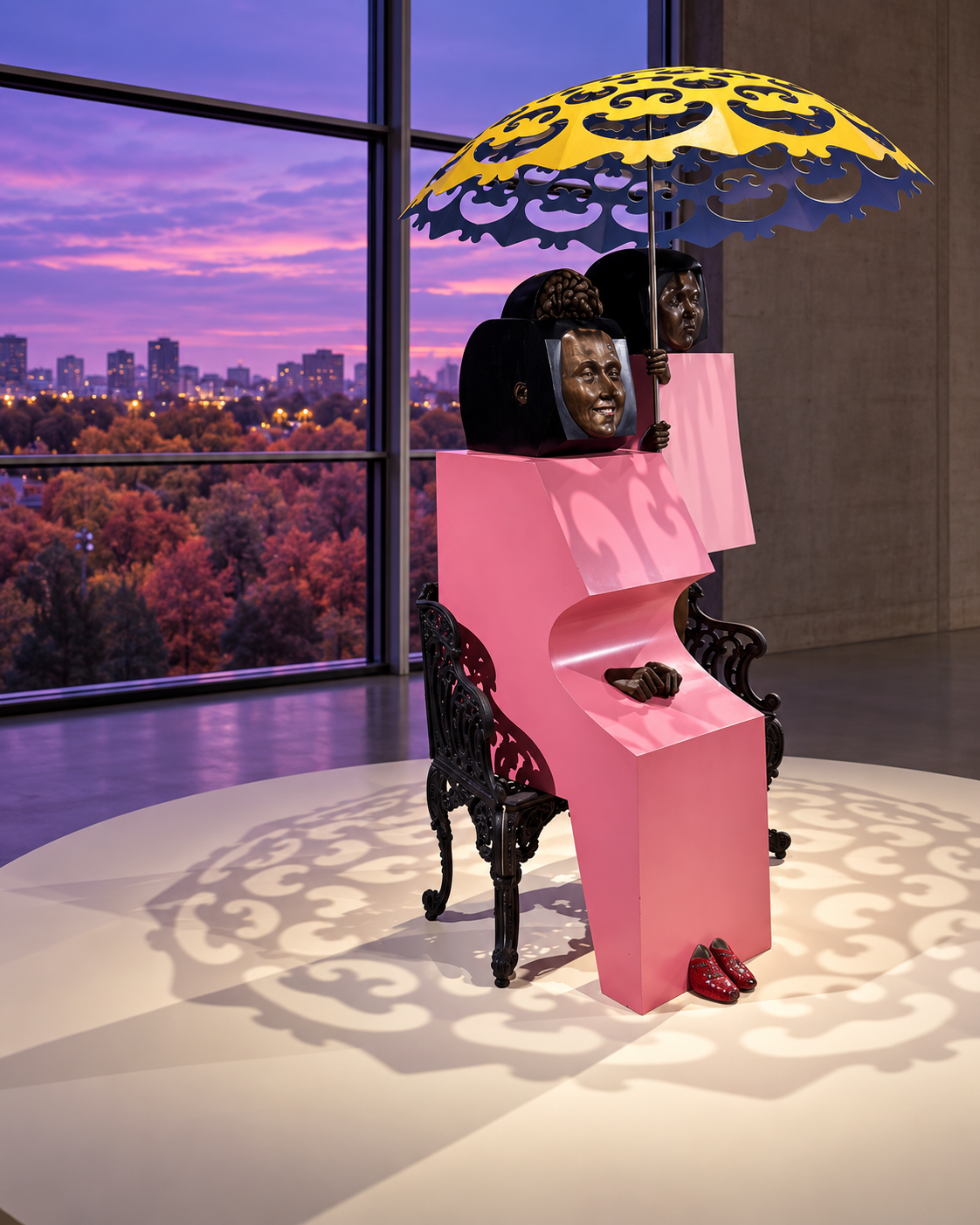
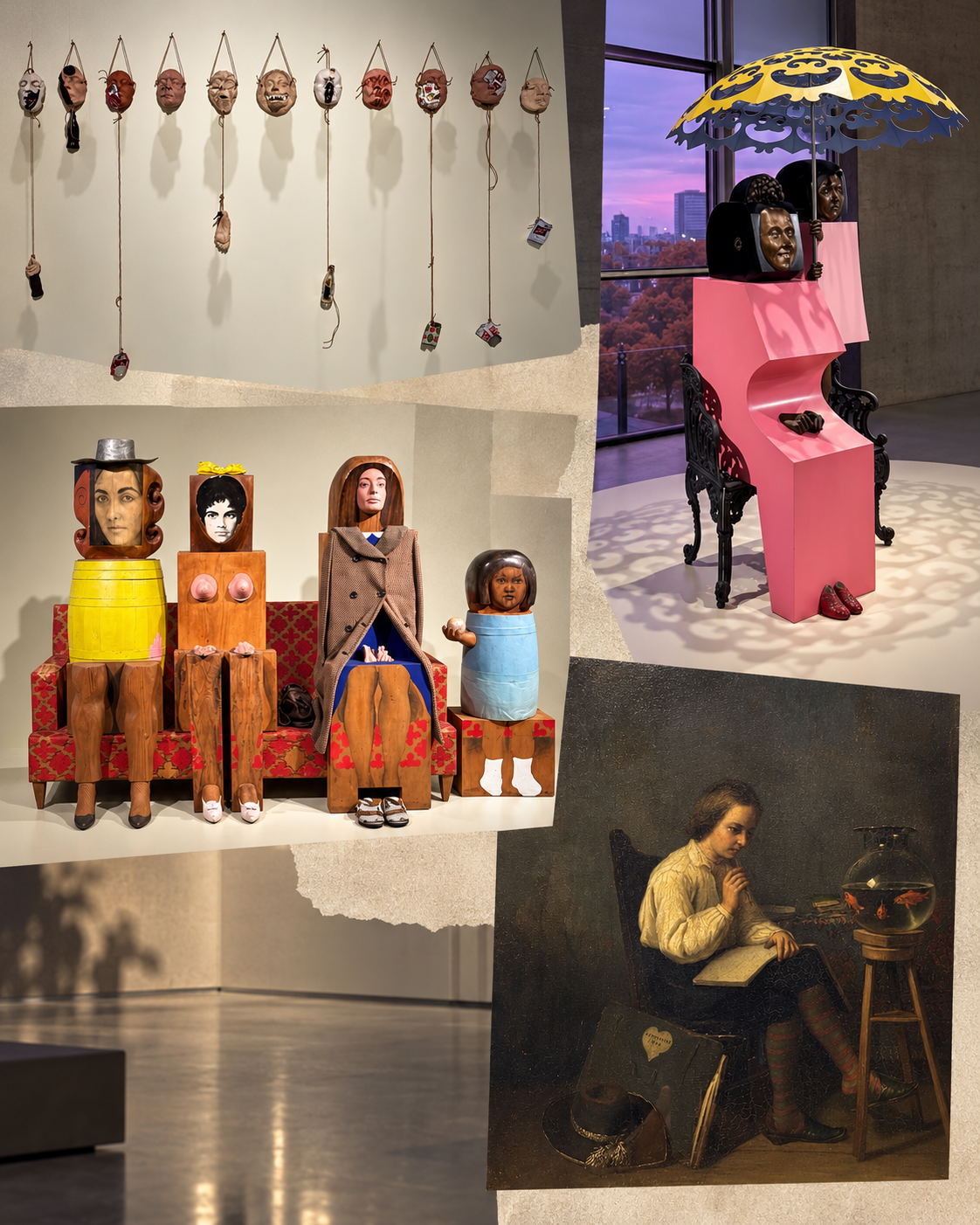
They are blocky. Wooden. Sometimes glamorous, sometimes grotesque, sometimes funny enough that you almost want to laugh before remembering that something tender is happening too. Bodies become boxes. Faces are carved, painted, photographed, repeated, distorted. Clothing can look almost more convincing than flesh. Hands emerge from strange places. A pair of shoes can sit underneath a body that seems only partially interested in being anatomically possible.
And somehow, they still read immediately as people.
Maybe that is what moved me.
The human animal, with the construction visible
I have spent a lot of time around images of idealized bodies. Greek sculpture is an obvious example: balance, proportion, smoothness, an attempt to make the human form approach something almost divine.
Marisol gave me nearly the opposite sensation.
Her figures felt constructed rather than perfected. They made no attempt to hide the fact that a human body is, frankly, a strange thing. We are soft and hard at once. We leak. We age. We grow hair in inconvenient places. We decorate ourselves. We make clothes and wigs and shoes and lipstick and then behave as though all of this is perfectly normal.
It is normal. That may be what makes it so endearing.
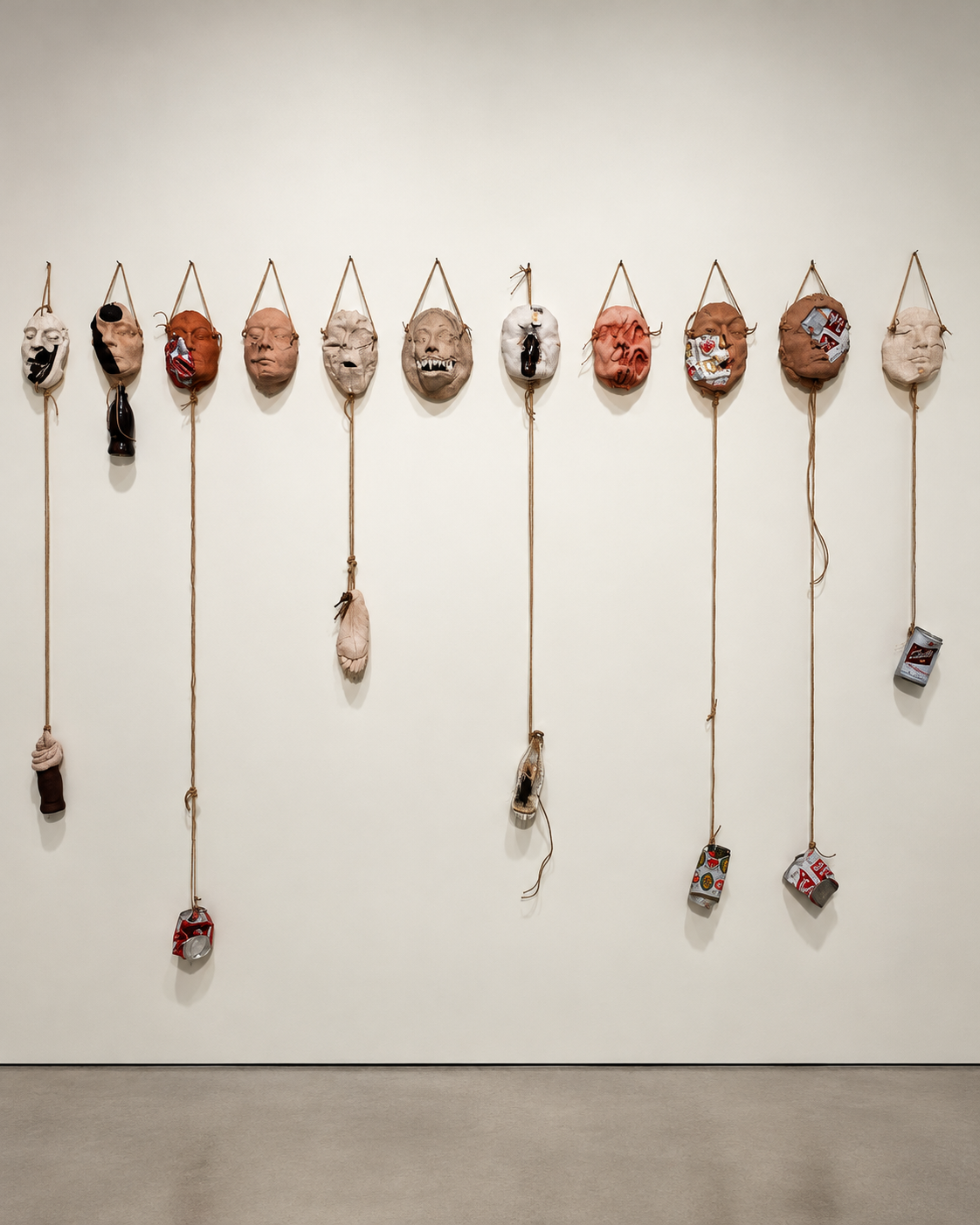
The hanging faces especially caught me. They did not offer one stable expression of “human.” They looked patched, bruised, funny, damaged, absurd, theatrical. Each face was recognizably a face, and yet none of them seemed interested in behaving properly.
I liked them for that.
There is something relieving about an artwork that does not insist that humanity must first become beautiful before it is worth looking at.
Marisol, and the refusal to fit neatly
Marisol herself resisted easy categorization. Museums now describe her as a sculptor whose work moved among Pop, Surrealism, assemblage and folk art. She frequently used her own face and body in her work, sometimes multiplying herself across different figures. She also worked with wood, plaster, photographs, paint, found materials and other objects, allowing flat image and solid body to coexist rather than resolving them into one consistent illusion.
That mixture matters to me. The figures are not pretending to be seamless.
They are image and object at the same time. Person and construction. Portrait and joke. Familiar and strange.
The Metropolitan Museum describes her monumental Self-Portrait Looking at The Last Supper as a work in which perception keeps moving between two and three dimensions. I love that. It feels almost like a description of being human: never entirely one thing, never quite reducible to a single view.
If you want to explore more of her work, the Buffalo AKG Art Museum holds Marisol’s estate and a major collection of her work.
Maybe truth can be a little awkward
I think this is part of why I love body horror, too.
Not because I enjoy suffering, but because body horror refuses the fantasy that bodies are clean, stable objects. A body changes. It can become ill. It heals badly. It scars. It produces fluids. It can betray our idea of who we thought we were. It reminds us that consciousness is happening inside an animal.
Marisol does something much gentler, but I felt a related honesty in her work.
The body is strange.
The self is assembled.
And neither fact makes us less worthy of tenderness.
Perhaps visible seams can even make tenderness easier. Perfection creates distance. Awkwardness lets me recognize something.
Relationship without completion
That thought followed me beyond the sculptures.
I have been thinking lately about relationship—not only romance, but encounter itself. Another person does not have to complete me. They do not have to become my partner, my responsibility, my future, or my answer.
Sometimes another person simply reveals something in me that could not appear alone.
The same thing happened with this art.
I did not arrive at the museum already carrying a finished theory about Marisol. I encountered the work first. Something in it made me laugh. Something made me uncomfortable. Something softened me. Only afterward did the ideas begin to form.
That may be a healthier way for me to meet more of reality.
Encounter first.
Interpretation second.
No demand that everything immediately become a framework.
Let the seams show
Later, I ate cheesecake.
I like that this belongs in the same day.
There was no dramatic conclusion waiting for me at the end of the museum. No final theory of beauty. No revelation that suddenly resolved bodies, relationships, God, art, or humanity.
There were strange wooden people.
There were faces hanging from strings.
There was a ridiculous blue car.
There was a slice of cheesecake.
And I was there to encounter all of it.
I think I am beginning to trust things more when I can see the seams.
Not because everything broken is beautiful, or because imperfection should be romanticized. Some things genuinely need repair. Some boundaries genuinely matter. Some relationships genuinely fail us.
But I no longer think truth has to arrive polished.
A person can be unfinished and still be worthy.
A body can be strange and still be loved.
A relationship can matter without becoming permanent.
A prayer can be sincere without certainty.
A piece of writing can be real before I know whether to call it art.
Maybe life does not become meaningful once all the pieces fit.
Maybe part of being alive is learning how to meet things while the construction is still visible.