The Curious Little Ape
50 strange, silly, tender, and rather wonderful things human beings do.

The Living Fractal · A Closer Look · Observation Collection No. 001
I’ve been thinking about humanity lately.
Not necessarily about what is wrong with us, what we ought to become, or how we’re going to solve all the problems of civilization.
Just about us.
These strange, clever, frightened, affectionate, occasionally ridiculous animals wandering around on a planet.
We are finite creatures. We eat, sleep, mate, argue, grieve, laugh, build things, destroy things, and worry about what other people think of us. We invent complicated explanations for existence, then spend twenty minutes looking for our glasses while they’re sitting on our heads.
And somewhere in the middle of all that, we do some extraordinarily endearing things.
I’ve started collecting them.
Not because humanity is innocent. We aren’t. We’re capable of tremendous cruelty, indifference, and destruction. I don’t want to pretend otherwise.
But we are also capable of tenderness, playfulness, curiosity, and some wonderfully unnecessary little gestures.
And I think those deserve our attention, too.
So here is my first collection of observations about Homo sapiens: the curious little ape.
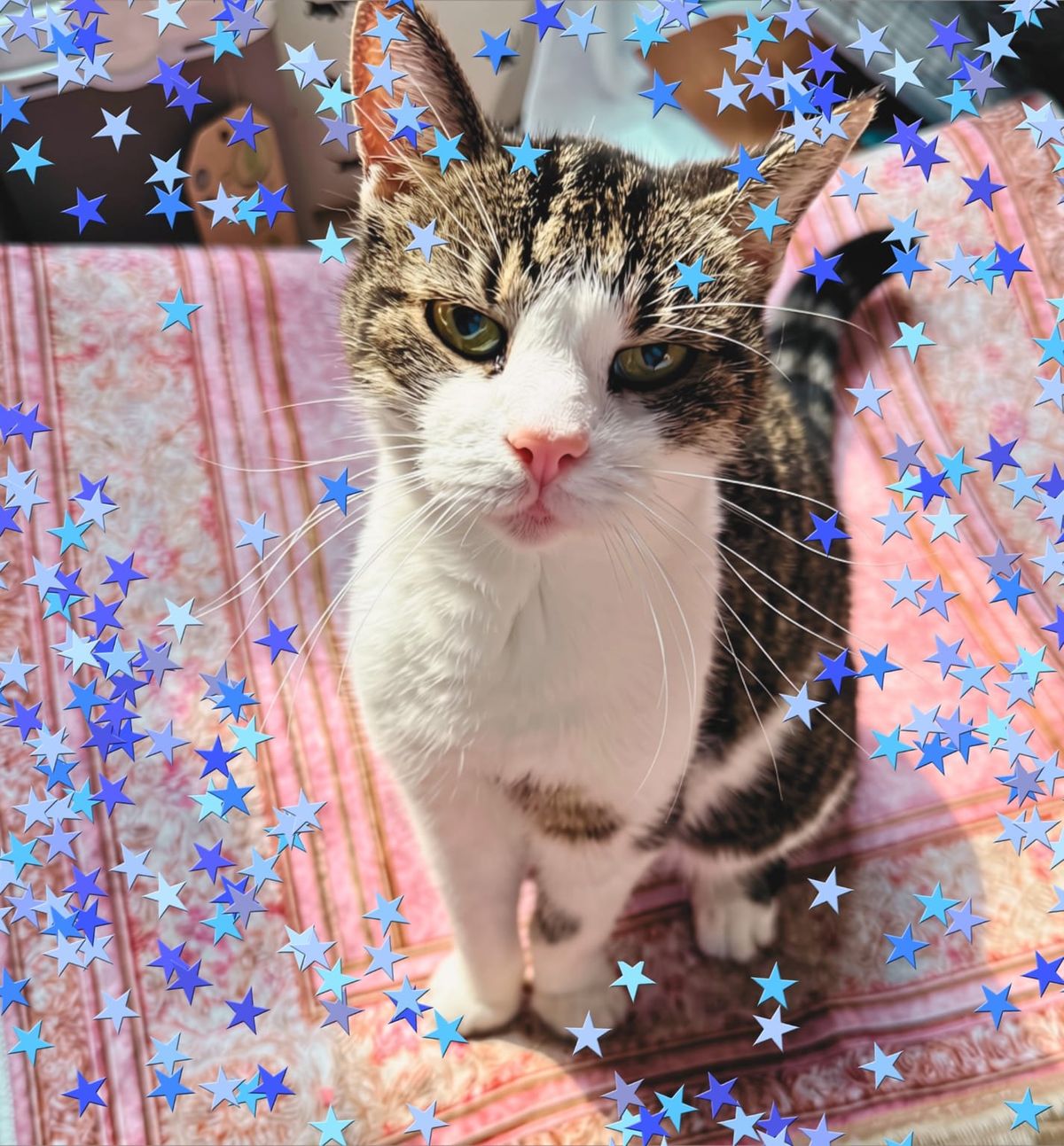
Featuring Yuki, our honorary feline correspondent.
I. We fall in love with other creatures
♡ 01. We invite tiny predators into our homes.
We take cats, creatures equipped with claws, sharp teeth, and considerable hunting instincts, and invite them to live in our bedrooms. We call them our babies. We buy them little beds. We feel personally honored when they decide to sit on our laps.
✦ 02. We give animals ridiculous names.
A hamster becomes Sir Fluffington. A dog becomes Princess Pickles. A cat receives an elaborate aristocratic title and is then addressed with complete seriousness while licking its own backside.
♡ 03. We love creatures who cannot speak our language.
A dog recognizes our footsteps. A cat learns when we usually wake up. We learn their preferences, habits, and little ways of communicating. Somehow, two different species develop a shared domestic life.
✦ 04. We buy cats expensive toys.
And then experience the peculiar disappointment of watching them ignore the toy and spend forty-five minutes playing with its cardboard packaging.
♡ 05. We interrupt our plans for snails.
A snail is crossing the pavement. Suddenly, we are responsible for traffic management. We carefully relocate this small, damp citizen to a safer patch of vegetation and continue our journey.
✦ 06. We get excited when animals choose us.
A strange cat approaches us on the street. We immediately feel selected. Perhaps even worthy. We tell someone about it later.
♡ 07. We mourn animals.
We keep their photographs. Their collars. Their favorite toys. Sometimes we remember the exact sound of their footsteps long after they’re gone. Love doesn’t seem particularly concerned with species boundaries.
✦ 08. We talk to animals as though they’re colleagues.
“Excuse me, sir, you cannot sit there.”
The cat offers no explanation.
♡ 09. We build houses for other species.
Birdhouses. Hedgehog shelters. Insect hotels. We have developed entire architectural projects for creatures who will never pay rent.
✦ 10. We rescue insects from swimming pools.
A bee is struggling in the water, and suddenly an enormous primate is conducting a delicate rescue operation with a leaf.
II. Our strange little social rituals
♡ 11. We wave at each other.
We raise one of our upper limbs and move it from side to side to communicate recognition, affection, departure, or friendliness. Sometimes from such a distance that neither person can actually see the other’s face.
✦ 12. We say hello to people we already know are there.
We enter a room and announce our presence with a sound. The other person makes a corresponding sound. Social contact has officially begun.
♡ 13. We invent elaborate greetings.
Handshakes, hugs, cheek kisses, bows, fist bumps, secret handshakes. Entire cultures have developed different ways of communicating: I acknowledge your existence.
✦ 14. We wave back at strangers by accident.
Someone waves in our direction. We wave enthusiastically. Then discover they were greeting the person behind us. We must now continue living with this information.
♡ 15. We bring people food.
Someone is ill, grieving, exhausted, or celebrating. We appear at their door carrying soup, cake, or an enormous casserole. Apparently, one of our oldest ways of saying I care about you is please eat this.
✦ 16. We apologize to furniture.
We bump into a table and say, “Sorry.”
The table remains unmoved.
♡ 17. We remember how someone takes their coffee.
A tiny collection of preferences becomes a gesture of affection. Two sugars. No milk. The blue mug. The one with the chipped handle.
✦ 18. We hold doors open for each other.
Sometimes from an inconvenient distance, creating a small social emergency in which the other person must suddenly jog.
♡ 19. We celebrate one another’s existence annually.
A person has completed another journey around the sun. We assemble, light tiny fires on a cake, sing a song, and present them with objects wrapped in decorative paper.
✦ 20. We invent inside jokes.
Two people hear an ordinary word and collapse into laughter. Nobody else understands. An entire miniature culture has formed between them.
III. We make the world unnecessarily beautiful
♡ 21. We put flowers in containers.
We encounter beautiful reproductive structures growing on plants, bring them indoors, arrange them in water, and place them somewhere we can admire them.
✦ 22. We decorate our bodies.
We paint our nails, braid our hair, wear earrings, perfume ourselves, and drape fabrics around our bodies in elaborate combinations. Sometimes simply because we like how it feels to look a certain way.
♡ 23. We collect pebbles.
A small rock looks interesting. We pick it up. It comes home with us. Years later, we still own the rock.
✦ 24. We make tiny gardens.
We put seeds in soil and become genuinely excited when a green shoot appears. “Look!” we announce to another adult. “It’s growing!”
♡ 25. We preserve flowers between book pages.
A flower is beautiful, and we know it will not remain that way. So we press it flat and keep a small record of having encountered it.
✦ 26. We invent decorative lights.
We hang tiny glowing objects around rooms, trees, windows, and balconies. They don’t necessarily illuminate anything useful. We just like the atmosphere.
♡ 27. We become attached to particular trees.
Not trees in general. That tree. The one near the house, beside the road, or along the path we used to walk.
✦ 28. We make art on our own bodies.
Tattoos, temporary drawings, elaborate makeup, nail art. We turn ourselves into moving little exhibitions.
♡ 29. We arrange objects because they look nice together.
A candle, a shell, a book, a photograph, a little ceramic animal. An entirely unnecessary composition that somehow makes a room feel more like home.
✦ 30. We photograph sunsets repeatedly.
The sun has been setting for billions of years. We have seen it happen before. Nevertheless: “Oh, look at the sky!”
And out come the phones.
IV. We are astonishingly silly animals
♡ 31. We laugh when someone makes an unexpected noise.
We can discuss mortality, philosophy, and the fate of civilization, but one well-timed fart noise can dismantle an entire conversation.
✦ 32. We invent games with imaginary rules.
A ball must enter a particular rectangle. Someone must not step on certain squares. A piece of cardboard represents a king. We become emotionally invested in the outcome.
♡ 33. We dress animals in little outfits.
A dog in a raincoat. A horse wearing a blanket. Occasionally a cat wearing a hat and expressing unmistakable dissatisfaction.
✦ 34. We sing to ourselves while doing chores.
An ordinary mammal is washing dishes and suddenly performing an entire concert in the kitchen.
♡ 35. We make faces at babies.
A fully grown adult abandons all dignity, inflates their cheeks, makes incomprehensible noises, and celebrates when a tiny human laughs.
✦ 36. We invent fictional people and then miss them.
We read a novel, watch a film, or play a game. The characters never existed in our world, yet we become attached to them. Sometimes we cry when their stories end.
♡ 37. We give objects personalities.
A car is stubborn. A printer is evil. A favorite mug is loyal. We become emotionally involved with household appliances that have absolutely no opinion of us.
✦ 38. We dance.
Sometimes in coordinated groups, sometimes alone in our bedrooms. Our bodies respond to rhythmic sound, and suddenly we’re moving our limbs in patterns that serve no obvious practical purpose.
♡ 39. We make miniature versions of things.
Tiny houses. Tiny furniture. Tiny food. Tiny books. We take enormous pleasure in discovering that an ordinary object can be made very, very small.
✦ 40. We invent elaborate surprises.
We secretly organize gatherings, hide gifts, decorate rooms, and spend considerable effort arranging a moment in which another person will be briefly confused and then delighted.
V. The tender, heartbreaking business of being human
♡ 41. We keep loving people after they die.
We visit graves, preserve handwriting, remember birthdays, and tell stories about people who are no longer here. Our relationships don’t simply disappear when someone’s life ends.
✦ 42. We make music together.
A collection of mammals coordinates breathing, fingers, vocal cords, and instruments to produce organized vibrations in the air. Other mammals listen and sometimes begin to cry.
♡ 43. We care for creatures who cannot repay us.
We feed injured birds, nurse sick animals, comfort frightened children, and help people who may never be able to return the favor.
✦ 44. We leave messages for our future selves.
Letters, diaries, photographs, time capsules. We know we will change, and we try to communicate with the person we haven’t become yet.
♡ 45. We keep the belongings of people we love.
A scarf that still smells familiar. A handwritten recipe. An old photograph. An ordinary object becomes precious because of the life it once accompanied.
✦ 46. We tell each other to get home safely.
We know perfectly well that saying it doesn’t control the roads, the weather, or the world. But we say it anyway. We want the other person to arrive.
♡ 47. We teach each other how to notice things.
A grandmother points out a mushroom. A parent shows a child a constellation. A friend introduces someone to a song. One person’s fascination becomes another person’s discovery.
✦ 48. We make places for strangers to sit.
Benches in parks. Chairs in libraries. Little resting places along paths. Somewhere, someone decided that another human being might want to stop for a while.
♡ 49. We ask each other whether we’ve eaten.
Across cultures and households, care sometimes arrives as an extremely practical question. Are you hungry? Have you had breakfast? Shall I make you something?
✦ 50. We investigate the universe, then become delighted by a mushroom.
We have developed telescopes, microscopes, mathematical theories, and extraordinary instruments for studying existence.
And still, a small fungus growing beside a tree can stop us in our tracks.
“What is that?”
We crouch down.
We look closer.
And an entirely new investigation begins.
♡ A little note about being human
I don’t think any of this proves that humanity is fundamentally good, or that everything will be all right.
A person can be tender in one part of their life and careless in another. We can love an animal and overlook another person’s suffering. Beautiful gestures don’t cancel harm, and noticing them doesn’t relieve us of the responsibility to do better.
But I don’t want to make cruelty the only thing I notice, either.
For a while, I was so focused on what was wrong that I found it difficult to see what else was here. I wanted life to be different before I could take part in it. Now I’m interested in learning how to live among these contradictions: to enjoy, grieve, laugh, mourn, question, and care, responsibly and imperfectly.
That includes the ridiculous parts. Especially the ridiculous parts.
There is something I find deeply moving about creatures who know so little, lose so much, and still remember which mug someone likes. Who argue about the meaning of existence and then interrupt themselves because a cat has entered the room.
I’m one of them. Writing this list is something a curious little ape would do, too: collect fifty observations, arrange them into sections, add a few hearts, and hope another person recognizes something of their own life in them.
Perhaps you did.
Perhaps tomorrow you’ll notice something I missed.
✦ Add something to the collection
What strange, silly, tender, or quietly wonderful thing have you noticed humans doing?
If you feel like sharing, leave a comment below or write to me through the journal’s contact link. A sentence is enough. A small moment is enough. You’re also welcome simply to keep an observation for yourself.
I’d love this collection to grow through things we actually notice. If I’d like to include your contribution in a future installment, I’ll ask your permission first and agree with you on how—or whether—you’d like to be credited. Sharing something here is not permission to republish it.
Until then: get home safely. Have something to eat. Tell the cat I said hello.
— Daphne