Attention Is a Way of Living
What we notice shapes how we respond. A reflection on listening, correction, community, and the small practices that give a life its direction.


Imagine a conversation in which you are already preparing your reply while the other person is still speaking.
You hear the words. You may even repeat them accurately. But part of your attention has gone elsewhere: towards defending a position, avoiding embarrassment, or finding the sentence that will make you sound right.
There is a small question here that reaches beyond conversation.
What am I making room for, and what am I leaving out?
I keep returning to this because I want the questions in The Living Fractal to reach ordinary life. A clearer account of the world matters. So does the way I listen to someone within it.
From a way of seeing to a way of living
In Taking Experience Seriously Without Turning It into Proof, I wrote about the distance between an experience and the explanation we give it. A feeling deserves attention; an interpretation can still need checking.
That distinction has a practical consequence. If I can recognise that my first explanation may be incomplete, I have a reason to stay in the conversation. I can ask what happened before deciding what it means. I can hear an objection without treating its arrival as the end of my dignity.
A way of thinking becomes more interesting when it asks something of the person using it. What would patience look like here? What would it mean to be answerable to the situation, rather than only to the story I prefer?
The answer may be very ordinary: one more question, a pause before replying, or a sentence beginning, “I may have misunderstood.”
Attention has limits
It would be easy to turn this into another demand: be more present, more generous, more aware, all the time.
I do not want to build that demand into the idea.
A person has a body, responsibilities, and a limited amount of time. Work, money, illness, noise, and exhaustion can narrow the room available for careful attention. A missed detail does not explain an entire character. Sometimes the next reasonable step is rest, a boundary, or asking for help.
The question is what is possible in the situation we actually have. Can I give this person a little less divided attention? Can this conversation wait until I can listen? Is there one thing that needs care, while the rest is allowed to remain unfinished?
I find that more useful than an ideal of constant awareness. It gives attention a scale at which it can be practised.
Other people interrupt the story
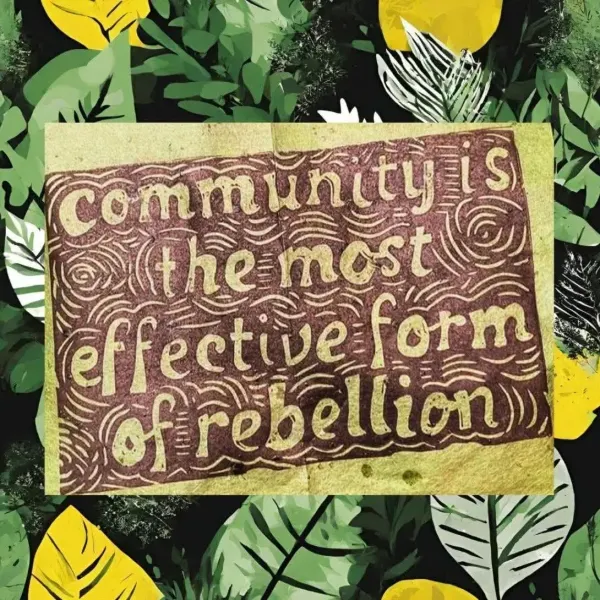
Community interests me partly because other people have lives that do not arrange themselves around mine. They need time. They disagree. They remember a conversation differently. They can notice the gap between what I say matters and what I repeatedly do.
There is room for learning in that friction. An apology becomes specific when another person can tell me what hurt. Patience becomes concrete when somebody needs longer than I expected. Humility has something to do when I discover that my account was incomplete.
But friction needs judgment. A difficult relationship is not automatically a good teacher. Correction deserves to be examined: is it specific, fair, and open to a response? Can disagreement happen without humiliation? Is repair possible on both sides?
Being teachable can include asking those questions. I want a form of community in which people can become more attentive while retaining the ability to speak honestly.
A small practice of returning
I like a simple way of bringing a question back to life:
- One thing learned. Something a conversation, a text, or an ordinary moment helped me see.
- One question still open. Something I do not yet understand, or an interpretation that needs more care.
- One way to practise. A small response that fits the circumstances: listen again, check a claim, acknowledge a mistake, offer help, or leave room to rest.
Three sentences can be enough. There is no need to produce a lesson from every day or to make an unfinished life sound resolved.
The purpose is to notice a connection. What I learn can affect what I do; what I do can reveal what I still need to learn.
I have put some starting questions in A Small Practice of Reflection. Use whichever one meets your actual day, or keep a question of your own.
What receives our care?
For me, the question of formation reaches beyond getting through a week efficiently. What kind of person do I want these efforts to make possible? What do I want to become more able to love, understand, and care for?
I cannot answer that by describing an ideal version of myself. I can begin where something specific asks for a response.
Someone is still speaking. A claim needs checking. An apology needs to be made. A limit needs to be respected.
These moments are small enough to overlook. They are also places where a way of seeing can acquire a shape in the world.
What deserves a little more of your attention, and what might that attention ask you to do?
— Daphne