The Half That Keeps Watch
On moving, nine thousand years of houses, and what makes a home a home.

Most of my things are in boxes at the moment. I'm about to move into a house of my own, and the strange in-between of it, half here and half not yet there, has me turning over a question that sounds simple until you try to answer it: what actually makes a home a home?
Not a house. A house is walls, a roof, a door that locks. Most of us have lived somewhere that was a perfectly good house and never quite became home, and some of us have felt at home in a place with almost nothing in it.
The word itself is older and wider than it looks. In Old English, hām could mean a village or an estate, and only sometimes a single house. Its relatives point outward too. Gothic haims meant "village". Old Icelandic heimr meant "world". Dutch still carries it in inheems: native, belonging to a place. Linguists argue about where the root ultimately comes from, but in its earliest uses home seems to have been less a building than the place where you belonged among others.
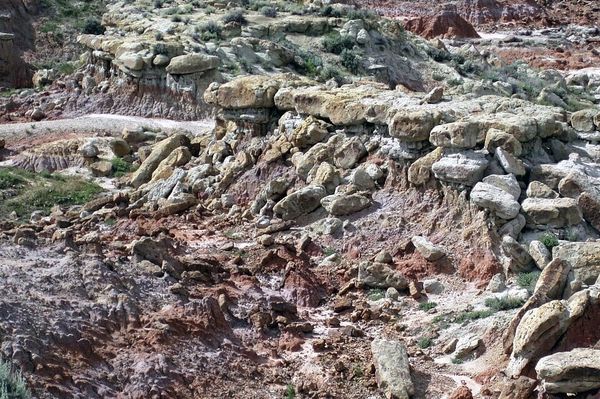
People have been making that place for a very long time. At Çatalhöyük, in what is now central Turkey, people lived from around 7100 BCE in mudbrick houses packed so tightly together that there were no streets. You walked across the rooftops and climbed down a ladder through a hole in the roof to get inside. And beneath the plastered platforms where they sat, worked and slept, they buried their dead. What that meant to them is a matter of careful interpretation, and archaeologists offer more than one. But it is hard not to feel the shape of it: home was where your people stayed, even after they were gone.
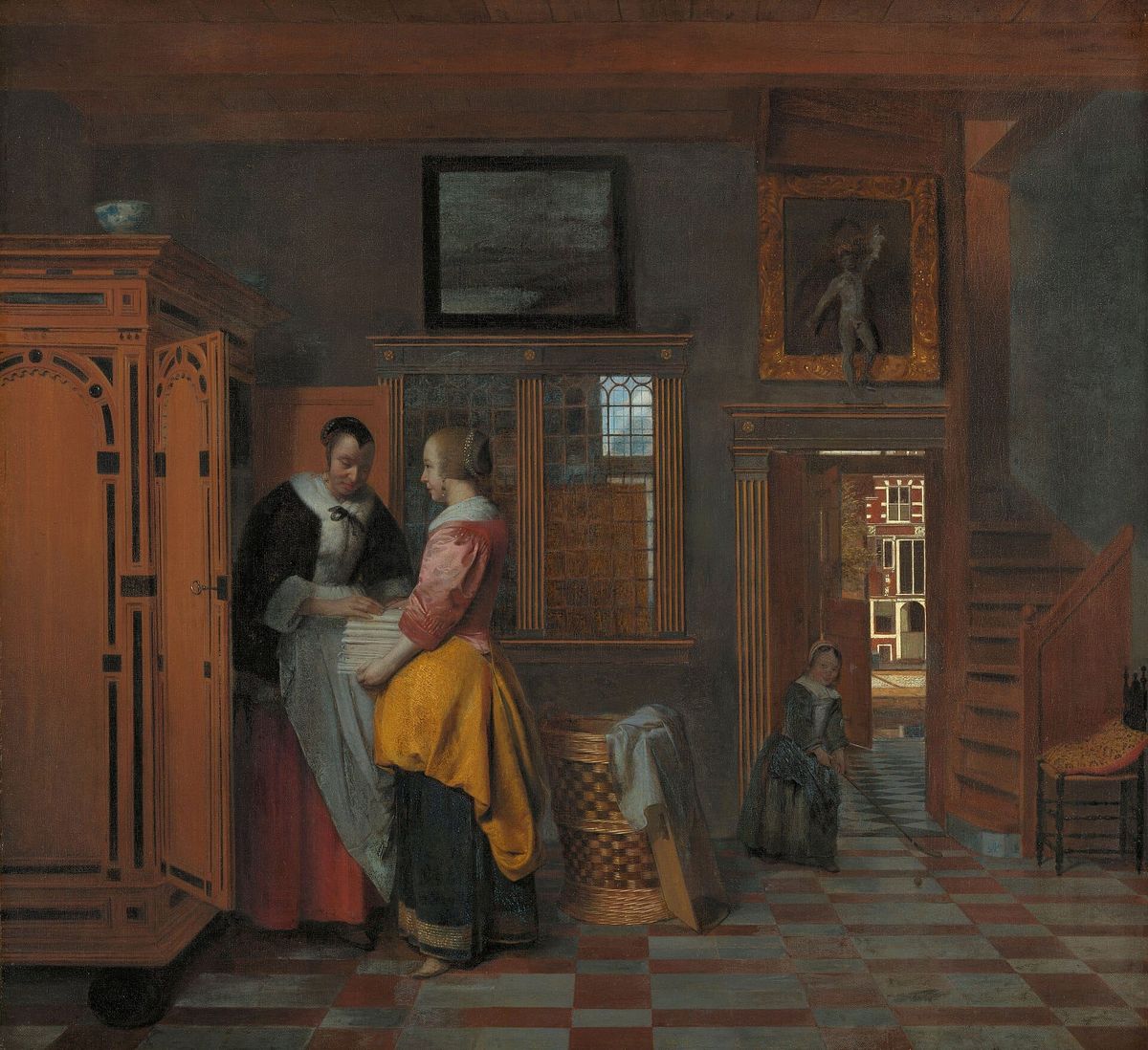
Jump forward to the Netherlands of the 1600s. In Home: A Short History of an Idea (1986), the architect Witold Rybczynski argues that something new took shape in Dutch burgher houses. Work began to move out of the rooms where families lived, and with that came a sense of domesticity found in few other European homes of the time: privacy, ease, a household arranged around the people in it rather than around the trade done there. You can see it in the paintings, a woman at a linen cupboard, a child in a doorway, daylight laid across a tiled floor. His account is one telling among several, and comfort surely did not begin in Delft. Still, it is a useful reminder that the cosy, private home most of us picture is not a human constant. It is an idea, and a fairly recent one.
Then there is the part no one decides. In 2016, researchers at Brown University led by Masako Tamaki looked at why people sleep badly on their first night somewhere new. During deep sleep, they found, a network in the left hemisphere of the brain stayed more awake than its counterpart on the right. When they played irregular beeps into the ear that feeds the left hemisphere, sleepers were more likely to wake, and they woke faster. Roughly speaking, half of you keeps watch in an unfamiliar room.
I find that oddly tender. It suggests that feeling at home is not only an emotion or a decision. It is also something the body grants, slowly, once it has checked that the creaks and shadows of a place are safe. That part is my interpretation rather than the study's claim, but it rings true to how arriving somewhere usually feels. You cannot hurry it by unpacking faster.
So what makes a home? I don't think there is one answer, and the history suggests there never was. But a few threads run through all of it. Belonging among others, whether those others are family, neighbours, animals, or the dead beneath the floor. Some separation from the world's demands, the thing those Dutch rooms made space for. And time: enough nights for the watchful half of the brain to stand down.
Which means a home may not be something you move into so much as something that happens between you and a place, through repetition. The same light at the same window. The route from bed to kettle in the dark. The first time you come back from somewhere and the air smells like yours. You can carry the boxes in a day. The rest takes as long as it takes.
What was the moment a place first felt like home to you? I would love to hear it. This piece is also on Substack, and new field notes are shared on Telegram at The Way.